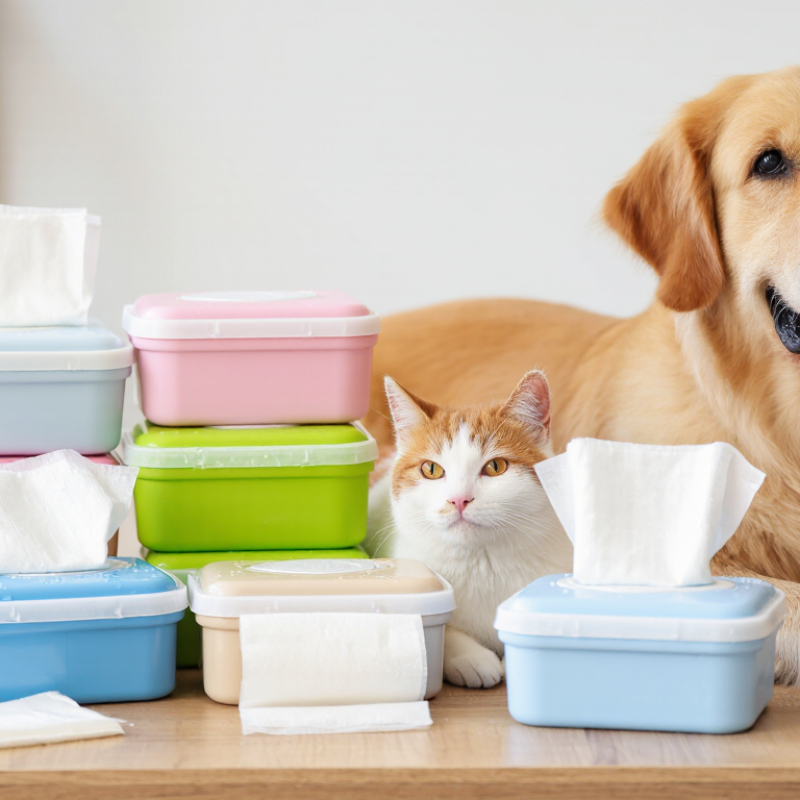
Choosing the right Pet Wet Wipes requires more than comparing pack sizes or attractive packaging. Global buyers need products that match real grooming situations, from muddy paws after a rainy walk to dust around a short-haired cat’s eyes. The best options should use gentle, pet-appropriate materials, clear ingredient information, reliable sealing, and packaging that keeps each wipe moist. Veterinarian Dr. Marty Becker’s practical reminder is valuable here: “A clean pet is a healthier, happier pet.” However, cleanliness should never mean harsh scrubbing or careless ingredient choices.
This 2026 guide examines Pet Wet Wipes through an evidence-focused buying lens. It considers skin sensitivity, wipe thickness, moisture balance, fragrance levels, biodegradability claims, and suitability for paws, coats, ears, and other external areas. Buyers should also review batch consistency, manufacturing transparency, testing documents, and customer support before placing large international orders. Small details matter. A dry corner can irritate skin. A weak lid can ruin an entire pack during shipping. Some “natural” claims still need closer inspection. That part is easy to overlook.
The market is improving, but it is not perfect. Product descriptions may sound similar while performance differs noticeably. Therefore, this overview compares practical value rather than repeating promotional language. It also recognizes regional preferences, private-label needs, storage conditions, and responsible packaging decisions. The strongest choice may not be the cheapest one. It should be safe, functional, traceable, and suitable for everyday pet care across different markets.
Pet wet wipes are pre-moistened, disposable cloths designed for gentle cleaning. They can remove mud, loose hair, food residue, and outdoor grime from a pet’s coat and paws. Some formulas are also made for surface cleaning, but buyers should check the intended use carefully. A wipe that smells pleasant may still irritate sensitive skin. In practical product evaluations, softness, moisture balance, and tear resistance matter more than attractive packaging. The cloth should feel damp, not dripping, and remain usable after opening.
Tips: Global buyers should request ingredient details, material specifications, and safety test documents. Check whether the formula avoids harsh alcohols, strong fragrances, and unnecessary dyes. Packaging also deserves attention. A reliable resealable lid helps prevent drying during storage and shipping. Confirm multilingual labels, batch information, shelf life, and disposal guidance before placing large orders. “Flushable” claims need special caution and independent verification.
Pet wet wipes support daily care in homes, grooming facilities, shelters, and travel settings. They are useful when water is unavailable, especially after rainy walks or dusty transport. However, they do not replace bathing, wound care, or veterinary treatment.
Buyers should match the wipe to the animal’s size, coat type, and skin condition. I would not assume one product suits every pet. Testing small samples first can reveal lint, fragrance reactions, weak seals, or poor cleaning performance. Responsible sourcing also means checking recycled-material claims and ensuring they are supported by credible documentation.
When comparing pet wet wipes for global buyers, start with the ingredient panel, not the front label. In hands-on checks, I look for a clear water base, mild cleansing agents, and controlled fragrance. Strong perfume can hide odors, but it may irritate sensitive skin. Alcohol-heavy formulas can feel cold and dry on a paw. Ingredients matter. Avoid products with vague “natural” claims and no concentration details. A wipe made for fur is not automatically suitable for eyes, ears, or broken skin.
Material changes the cleaning experience. Spunlace nonwoven fabric usually feels soft and holds liquid evenly. A very thin sheet may tear around claws, while an overly wet sheet leaves dripping fur. I test one wipe on a muddy paw, then fold it once to check whether it still cleans. The texture should lift dust without rough rubbing. Compostable or biodegradable descriptions also need careful verification. These terms can depend on fiber blends and local disposal systems. Marketing is not evidence.
Cleaning performance should be judged after use, not during the first swipe. Check whether paw pads feel clean, fur remains sticky, or fragrance lingers after ten minutes. For oily coats, a wipe may remove surface dirt but fail on deep grease. That is normal. My early comparisons focused too much on moisture and ignored residue. I now record sheet strength, skin feel, odor, and drying time across several pets. A reliable choice balances gentle ingredients, durable material, and practical cleaning power, while respecting each animal’s sensitivity.
Different animals need different cleaning approaches. A wipe suitable for a muddy dog may irritate a cat’s sensitive skin. Dogs usually need thicker, textured wipes for paws, coat debris, and outdoor dirt. Cats often need softer, fragrance-free wipes around the coat and rear area. Avoid wiping near the eyes.
Small mammals require extra care. Rabbits and guinea pigs may groom themselves and ingest residue. Choose water-based, alcohol-free materials with minimal ingredients.
For birds, wet wipes are usually unsuitable for feathers. A damp, clean cloth is often safer. Never replace veterinary treatment with routine wiping.
Read the label carefully. Look for clear material information, intended animal use, pH guidance, and skin-safety testing. The American Pet Products Association’s 2023–2024 National Pet Owners Survey reported that 66% of U.S. households owned a pet, showing the scale of everyday care needs. FEDIAF’s 2024 Facts & Figures estimated about 299 million pets across Europe, where household routines and animal types vary widely. These reports support a practical point: global buyers should select by species, skin condition, and cleaning purpose, not package size alone.
Unscented is usually wiser. “Natural” does not automatically mean safe. I would also question oversized wipes that dry out before use. A better choice balances moisture retention, soft texture, responsible packaging, and easy disposal. No wipe fits every animal.
For global buyers, the best pet wet wipes begin with documented safety, not attractive packaging. Check the full ingredient list, skin suitability, fragrance level, and preservative system. Alcohol, strong perfumes, and certain essential oils may irritate sensitive pets. The product should clearly state whether it suits paws, fur, ears, or external skin. It should never imply use inside the eyes, mouth, or other sensitive areas.
Certifications can support trust, but they need verification. Ask suppliers for current laboratory reports, safety data, microbiological testing, and stability records. Manufacturing standards, such as controlled hygiene systems, are useful evidence. However, one certificate does not prove every batch is safe. Lot numbers and traceability matter. I would also request testing against the requirements of the destination market, because accepted claims and labeling rules differ worldwide.
Packaging affects both hygiene and shelf life. A strong resealable lid, moisture-resistant pouch, and clean dispensing opening help prevent drying and contamination. Buyers should check production dates, expiry dates, storage conditions, and the number of wipes per pack. Stability testing should cover heat, humidity, and transport pressure. In practice, wipes can arrive dry after long shipping, even when the formula looked reliable. No checklist is perfect. A small trial order may reveal leakage, weak seals, or unpleasant texture before large-scale purchasing.
How safety, certifications, packaging, and shelf life affect buying decisions
The chart uses a 100-point procurement planning model for international buyers. Safety documentation receives the highest weighting because pet wipes may contact skin, paws, and areas near the mouth. Certification evidence, packaging integrity, and unopened shelf life also influence import approval, logistics, retail handling, and customer confidence. Certification requirements vary by destination market and product claims.
Choosing reliable suppliers for international pet wipe orders requires more than comparing price lists. Experienced buyers inspect ingredient details, material composition, fragrance levels, and moisture retention. A good supplier should provide clear specifications, production photos, batch records, and sample packs. Ask whether the wipes remain moist after several weeks in sealed packaging. That small test can reveal weak sealing or unstable formulas.
Communication matters during overseas purchasing. Reliable suppliers answer questions directly and explain lead times, minimum order quantities, carton dimensions, and shipping terms. Request samples from the same production line planned for your order. Compare sheet size, texture, tear strength, and cleaning performance. Some suppliers send excellent samples but change materials later. This happens. Written confirmation helps reduce that risk, although it cannot replace inspection.
Tips: Start with a small trial order. Check carton labels, inner-pack seals, and odor after transport. Confirm export documents and destination-market requirements with qualified professionals. Keep approved samples for comparison.
A dependable supplier also welcomes reasonable quality checks before shipment. Discuss inspection points early, including count accuracy, leakage, damaged cartons, and printing clarity. Keep records of conversations and revised specifications. I once underestimated humidity during storage, and the packaging softened. That mistake changed how I review warehouse conditions. Low prices still matter, but consistency protects a long-term pet wipe business.
| Evaluation Dimension | Practical Benchmark for Pet Wet Wipes | How Buyers Can Verify It | International Order Considerations |
|---|---|---|---|
| Wipe Size | Common commercial formats include approximately 15 × 20 cm, 20 × 20 cm, and 20 × 30 cm. The selected size should match the intended use, such as paws, ears, coat, or general cleaning. | Measure samples after opening and compare the unfolded dimensions with the purchase specification. Check whether the tolerance is stated in the technical sheet. | Larger wipes may increase carton volume and freight cost. Confirm packed dimensions before requesting an international shipping quotation. |
| Nonwoven Material | Common substrates include spunlace, airlaid, and other nonwoven constructions. A typical commercial basis weight is approximately 30–60 g/m², depending on softness and strength requirements. | Request the substrate composition, basis weight, fiber information, and a material test report. Check for excessive lint, rough edges, or tearing during use. | Confirm whether the material is synthetic, cellulose-based, or a blend, especially when destination-market labeling or sustainability claims are important. |
| Wetness and Lotion Load | Wipes should be evenly saturated without excessive dripping. The lotion should remain distributed throughout the pack and should not dry rapidly under normal storage conditions. | Compare the net weight of sealed and drained samples, inspect several positions within the pack, and conduct an accelerated storage check using agreed test conditions. | Lotion load affects product weight, leakage risk, freight cost, and packaging requirements. Include a maximum leakage tolerance in the purchase specification. |
| Formula and Ingredient Transparency | Request a complete ingredient list and clearly identify preservatives, fragrances, botanical extracts, alcohol, essential oils, and other functional additives. Fragrance-free options are often preferred for sensitive pets. | Review the formula document, safety data where applicable, allergen information, and the final printed ingredient declaration before mass production. | Ingredient and labeling rules differ by destination. Obtain regulatory review for the importing country before approving packaging or marketing claims. |
| Skin and Coat Tolerance | The product should be designed for external pet cleaning and should avoid unsupported claims such as treating infections, wounds, or medical conditions. | Request irritation or tolerance testing documentation when available. Conduct a controlled sample evaluation with veterinary or professional guidance where appropriate. | Do not market the wipes as a veterinary medicine or therapeutic product unless the destination country specifically permits and supports that classification. |
| Microbiological Quality | Finished wipes should meet the buyer’s agreed microbiological limits and should be protected from contamination during filling, sealing, and storage. | Request recent batch test results covering total microbial count, yeast and mold, and relevant specified pathogens according to the agreed testing method. | Set testing frequency, sample size, laboratory requirements, and release criteria in the quality agreement rather than relying only on a supplier statement. |
| Preservation and Shelf Life | A commonly requested commercial shelf life is 24–36 months, but the actual period must be supported by stability data for the final formula and packaging. | Check the expiry date, lot code, stability report, packaging compatibility data, and storage instructions. Test both unopened and opened-pack performance. | Allow sufficient remaining shelf life for production, ocean or air transit, customs clearance, warehousing, and retail distribution. |
| Packaging Format | Typical formats include resealable soft packs containing approximately 30–80 wipes, individual sachets, and larger refill packs. The closure should limit evaporation and contamination. | Open and reseal the pack repeatedly, inspect the adhesive or lid seal, and check whether wipes can be dispensed without pulling out multiple pieces. | Confirm packaging material, artwork requirements, barcode format, language versions, recycling marks, and country-of-origin information before printing. |
| Leakage and Seal Integrity | Finished packs should remain sealed during normal handling, stacking, and transport. No visible leakage, swollen packaging, or dried-out sections should appear in approved samples. | Use a documented seal inspection and transport simulation. Check samples from different production positions rather than testing only one pack. | Carton design, pallet stacking, temperature variation, and long-distance transit can affect leakage. Approve a transport test before large-scale shipment. |
| Flushability and Disposal Claims | Unless the product has passed appropriate flushability testing and the destination market permits the claim, label the wipes as non-flushable and instruct users to dispose of them in household waste. | Review the disposal statement, substrate composition, and any test report supporting environmental or flushability claims. | Disposal wording and environmental claims can be regulated. Avoid terms such as “biodegradable,” “compostable,” or “flushable” without documented evidence and market review. |
| Quality Management | A reliable supplier should maintain documented incoming-material checks, in-process controls, finished-product inspection, complaint handling, and lot traceability. | Request quality procedures, inspection records, corrective-action examples, and a sample certificate of analysis linked to a production lot. | Use a written quality agreement defining acceptable quality limits, inspection rights, nonconformance procedures, and replacement or credit terms. |
| Minimum Order Quantity | Indicative private-label orders commonly range from approximately 1,000 to 10,000 packs, while custom packaging, special formulas, or individual sachets may require higher quantities. | Request a quotation showing MOQ by size, formula, packaging format, artwork version, and production batch. | Compare the total landed cost rather than unit price alone. Include tooling, plates, testing, artwork, samples, freight, duties, and destination charges. |
| Production Lead Time | After artwork and specifications are approved, a typical repeat production cycle may take approximately 20–45 business days, depending on materials and order volume. | Ask for a written production schedule covering material procurement, printing, filling, inspection, and dispatch. | Add time for sampling, public holidays, port congestion, customs clearance, and possible inspection delays when planning inventory. |
| Export Documentation | The shipment may require a commercial invoice, packing list, transport document, certificate of origin, product specification, and other documents requested by the destination country or buyer. | Confirm document templates before shipment and ensure that product name, quantity, lot number, carton count, and declared value are consistent across documents. | Use an experienced customs broker or importer of record to confirm tariff classification, import permits, labeling rules, and documentation requirements. |
| Sample Approval and Pre-Shipment Inspection | Mass production should begin only after approval of a signed reference sample covering wipe size, material, scent, wetness, packaging, labeling, and carton configuration. | Keep an approved golden sample and use a pre-shipment inspection checklist with measurable acceptance criteria. | For international orders, inspection before balance payment can reduce risks related to quantity shortages, incorrect artwork, leakage, or specification changes. |

We are the most reliable and proficient jute goods manufacturer & supplier that helps businesses or individuals with various exportable agricultural commodities biz and jute goods by shipping them worldwide. Our right-time service ensures that whatever color and size of jute product you need, we can make it happen anytime and anywhere! Let’s keep our earth safer to live in!
Important link
Address
Bangladesh Address:
Fair Plaza (9th Floor), Plot : 3C, Section : 01, Mirpur, Dhaka:1216
UK Office:
242 Manor Road, Droylsden, Manchester, M43 6JD, United Kingdom.
Let's Talk
We are the most reliable and proficient jute goods manufacturer & supplier that helps businesses or individuals with various exportable agricultural commodities biz and jute goods by shipping them worldwide. Our right-time service ensures that whatever color and size of jute product you need, we can make it happen anytime and anywhere! Let’s keep our earth safer to live in!
Bangladesh Address:
Fair Plaza (9th Floor), Plot : 3C, Section : 01, Mirpur, Dhaka:1216
UK Office:
242 Manor Road, Droylsden, Manchester, M43 6JD, United Kingdom.