
• Home
  • About
    • jute Bag

      Eco-Chic and Durable – Perfect for Sustainable Living.

      Cashew Nut Bag

      Sustainable jute bag for lasting cashew nut freshness

      Cocoa Bag

      Eco-friendly jute bag for rich cocoa flavor preservation

      Coffee Bag

      Elegant, durable jute bag to keep coffee beans fresh and eco-friendly

      Hazel Nut Bag

      Eco-conscious jute bag for hazelnut freshness and quality

      Shea Nut Bag

      Durable jute bag for fresh, organic shea nuts

      Tote Bag

      Stylish, eco-friendly jute tote for daily essentials

      Wheat Bag

      Sustainable jute bag for optimal wheat freshness

    • Jute Yarn

      Eco-Chic and Durable – Perfect for Sustainable Living.

      Jute Rope

      Sustainable jute bag for lasting cashew nut freshness

      Jute Fabrics

      Eco-friendly jute bag for rich cocoa flavor preservation

      Hessian cloth

      Sustainable Hessian cloth suppliers

  • Products
  • Export Country
  • Blog

What Is a 24K Puffs Disposable Vape and How Does It Work?

A 24K Puffs Disposable Vape is marketed as a high-capacity, single-use electronic cigarette. The “24K” label usually refers to an estimated 24,000 inhalation cycles under controlled testing. It does not guarantee 24,000 real-world puffs. Puff duration, airflow, battery performance, and user habits can change the result. The number sounds exact. It is not.

Inside, a rechargeable or precharged battery powers a small heating coil. The coil warms e-liquid held in an absorbent wick or internal reservoir. This creates an aerosol, which the user inhales through the mouthpiece. Many devices contain nicotine, commonly in nicotine-salt formulations, although specifications differ by manufacturer and market. A clear display may show battery or liquid levels, but these indicators are not always laboratory-verified.

Industry data helps explain why high-capacity products attract attention. Grand View Research has reported continued growth in the global e-cigarette market, driven partly by compact designs and disposable formats. However, market growth does not prove safety or suitability. The World Health Organization states that e-cigarette emissions can contain nicotine and other potentially harmful substances. In the United States, the CDC’s 2024 National Youth Tobacco Survey reported approximately 1.63 million middle and high school students currently used e-cigarettes. That figure strengthens the need for age controls and responsible communication.

This guide examines the device’s components, operating cycle, labeling limits, and environmental concerns. It also considers regional rules, because authorization and nicotine limits vary widely. Technical explanations should not become product promotion. Some questions remain imperfectly answered, especially about long-term waste and repeated exposure. Readers should check current guidance from their national health regulator before interpreting any product claim.
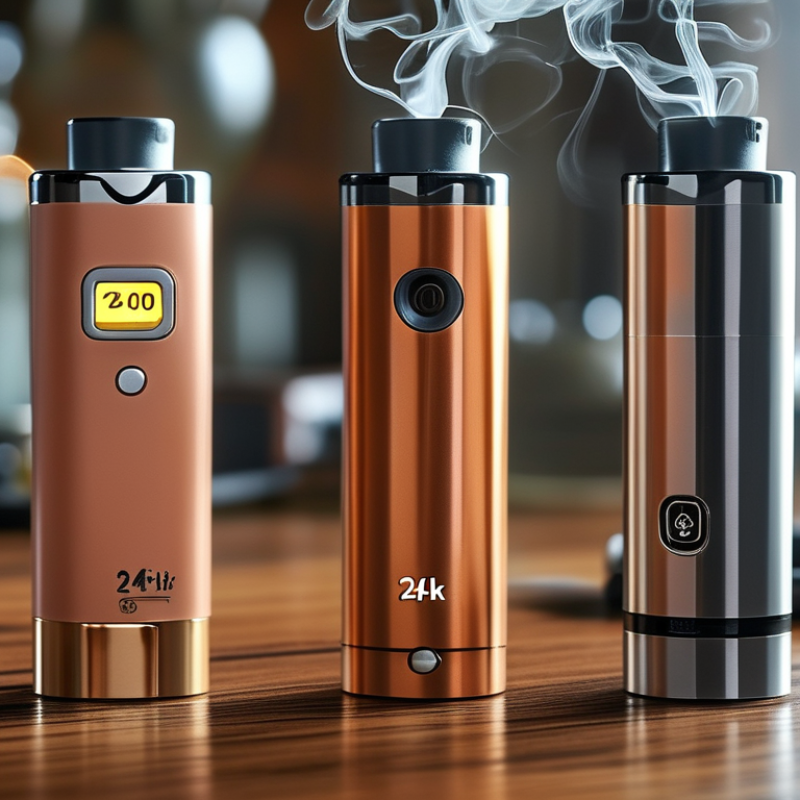
What Is a 24K Puffs Disposable Vape and How Does It Work?

What Is a 24K Puffs Disposable Vape?

A 24K puffs disposable vape is a compact, pre-filled electronic vaping device advertised to provide up to 24,000 inhalations. The number is an estimate, not a guaranteed result. Puff length, inhalation strength, storage conditions, and device settings can change actual use. A longer draw consumes more e-liquid than a short one. The name sounds precise, but real performance varies.

Inside, a battery powers a small heating coil. The coil warms the e-liquid and creates an aerosol when the user inhales. Many models use an airflow sensor, so the device activates without a button. Some include a charging port, while others cannot be recharged.

The liquid may contain nicotine, flavorings, and carrier ingredients, depending on the product and local requirements. Check the packaging for ingredients, nicotine strength, warnings, and authorized age limits. Devices should only be used where legally permitted.

Tips: Keep the vape away from heat, water, children, and pets. Stop using it if the casing leaks, swells, becomes unusually hot, or tastes burnt. Do not open the battery compartment. Store it upright when possible. Dispose of the device through an approved battery or electronic-waste service, rather than placing it in household fire-prone rubbish. If you have never used nicotine, starting is not risk-free. Even experienced users may misjudge how much aerosol they inhale.

What Components Make Up a 24K Puffs Disposable Vape?

A 24K puffs disposable vape is built around several compact components. The outer shell protects the internal parts and gives the device its familiar rectangular shape. Inside, a lithium battery supplies power to a small heating coil. The coil sits near an absorbent wick, which draws e-liquid from the reservoir. When the user inhales, an airflow sensor detects the pressure change. A control board then activates the coil, producing an aerosol that travels through the mouthpiece.

The e-liquid reservoir is another important component. It usually contains a base liquid, flavoring, and sometimes nicotine, depending on the product and local regulations. The advertised 24,000-puff figure is an estimate, not a guaranteed result. Puff length, inhalation frequency, coil condition, and storage temperature can change the actual lifespan. That number deserves careful reading.

There is also a small indicator light in many designs. It may show activation, battery status, or a low-power warning. Some devices include basic protection against overheating, overcharging, or short circuits, but protection systems are not identical. The battery cannot be treated casually. Heat, leaks, or physical damage can create safety concerns. In practice, the device is simpler than it looks, yet its performance depends on several parts working together. I would not assume a large puff claim means better construction or safer use. The label and safety instructions matter more.

How Does a 24K Puffs Disposable Vape Produce Vapor?

A 24K puffs disposable vape generates vapor through a small battery, an airflow sensor, and a heating coil. When a user inhales, the sensor activates the battery. The battery sends power to the coil, which heats liquid held in a cotton or mesh wick. This liquid usually contains propylene glycol, vegetable glycerin, flavorings, and, where legally permitted, nicotine. The coil does not boil the liquid like water. It creates a fine aerosol from heated droplets.

The advertised 24,000-puff figure is a laboratory estimate. It depends on liquid volume, battery capacity, coil resistance, and puff size. CORESTA Recommended Method 81 uses a 55-milliliter puff lasting three seconds, with a 30-second interval. Real users rarely follow identical patterns. Shorter puffs may increase the count, while long inhalations reduce it quickly. The number sounds precise. It is not.

The National Academies of Sciences, Engineering, and Medicine reported that e-cigarette aerosol forms through heating, not simple evaporation. The CDC also identifies possible exposure to ultrafine particles, volatile organic compounds, metals, and nicotine. Therefore, “vapor” is a convenient term, but “aerosol” is more technically accurate. From a product-testing perspective, performance can change as the battery weakens or the wick dries. That detail is often overlooked. I would treat the puff number as a comparison label, not a personal forecast.

What Determines Its 24,000-Puff Capacity?

A 24K puffs disposable vape is designed to advertise up to 24,000 inhalations. That figure is an estimate, not a guaranteed experience. Its capacity mainly depends on e-liquid volume, battery output, coil efficiency, airflow, and puff duration. A longer draw consumes more liquid and energy. A tighter airflow can also create denser vapour.

Testing conditions matter greatly. CORESTA Recommended Method No. 81 and ISO 20768:2018 use controlled puffing conditions for aerosol measurement. Real users rarely match them. Someone taking three-second draws may receive far fewer puffs than someone taking one-second draws. The label can look precise, but the number is not universal. Battery ageing, cold storage, and residue on the coil can reduce usable capacity. In practice, “24,000” describes a designed ceiling, not a personal forecast. That distinction deserves more attention.

Tips: Check the stated liquid volume and battery rating, not only the puff count. Avoid unusually long draws, and stop when the device tastes burnt or overheats. The U.S. CDC states that no tobacco product, including e-cigarettes, is risk-free. Product performance data should therefore be read alongside health information, not treated as proof of safety. Also, regional rules differ, so verify local requirements before purchase or use.

How Should Users Understand Its Features and Limitations?

A 24K puffs disposable vape is designed to deliver an estimated 24,000 inhalations from one device. It usually combines a large e-liquid reservoir, a rechargeable battery, and an automatic draw sensor. When a user inhales, the sensor activates a heating coil. The coil warms the liquid and produces an aerosol.

That number is theoretical. Puff counts depend on inhalation length, airflow, coil temperature, and user habits. A short draw may produce far more advertised puffs than a long, deep draw. Battery aging can also reduce performance before the liquid is fully used. The National Academies of Sciences, Engineering, and Medicine reported that e-cigarette aerosol can contain nicotine, ultrafine particles, metals, and flavoring chemicals. Therefore, a larger capacity does not mean lower exposure.

Users should also examine nicotine concentration, ingredient labeling, charging instructions, and signs of overheating. The U.S. Centers for Disease Control and Prevention reported that 10.0% of high school students used e-cigarettes in its 2023 National Youth Tobacco Survey. This figure shows why clear warnings and responsible storage matter, especially around young people. The device may feel convenient, but convenience can hide frequent, automatic use. I would treat the 24K figure as a laboratory estimate, not a personal usage promise.

What Is a 24K Puffs Disposable Vape and How Does It Work? - How Should Users Understand Its Features and Limitations?

Data Dimension General Information How Users Should Interpret It Main Limitation or Consideration
Product Type A prefilled, single-use electronic vaping device designed to deliver aerosol from e-liquid without conventional combustion. It is intended to be used until its e-liquid or battery is depleted. “Disposable” does not mean environmentally disposable; batteries and electronic components require appropriate waste handling.
“24K Puffs” Meaning A claimed maximum of approximately 24,000 inhalations under specified testing conditions. The figure is an estimate, not a guaranteed number of real-world uses. Puff duration, airflow, inhalation strength, temperature, and device cutoff settings can substantially change the actual result.
Heating System A battery supplies power to a heating coil, which vaporizes e-liquid absorbed by a wick or similar material. The device produces an aerosol rather than smoke from burning tobacco. Aerosol may contain nicotine, flavoring chemicals, ultrafine particles, and other substances; it is not harmless water vapor.
E-Liquid Capacity High-puff devices generally contain more e-liquid than low-capacity disposable devices, but the exact volume differs by product and jurisdiction. Users should check the labeled liquid volume rather than infer it from the puff count alone. A large advertised puff count does not establish a standardized e-liquid quantity or nicotine exposure.
Nicotine Strength Nicotine concentration may be stated as a percentage or in milligrams per milliliter, depending on the market. The label should be checked carefully because concentration and total nicotine content are different measurements. Nicotine is addictive. Actual intake varies with device output, puff behavior, and user experience.
Battery and Charging Some large-capacity disposables include an internal rechargeable battery, while others are not designed to be recharged. Users should follow the device instructions and use only the intended charging method. Do not use a damaged, leaking, swollen, overheated, or modified device. Rechargeable models still become waste after the e-liquid is exhausted.
Activation Method Many devices activate automatically when the user inhales; some may include adjustable controls or display indicators. Automatic activation is convenient but does not indicate a precise dose per puff. Airflow sensors and electronics can malfunction, especially after liquid leakage, impact, moisture exposure, or improper storage.
Expected Usage Duration A device advertised for 24,000 puffs may last substantially longer than a smaller disposable for some users. Duration depends more on personal puff frequency and inhalation style than on the headline number alone. Heavy or long inhalations can reduce the usable lifespan and may cause burnt taste, reduced vapor, or earlier battery depletion.
Puff Counting Some devices display an estimated puff count using an electronic counter or sensor. A counter can help indicate usage but should not be treated as a laboratory measurement of inhaled nicotine. Counters may register short activations and may not accurately reflect aerosol volume or nicotine delivery.
Health Considerations Vaping can expose users to nicotine and other aerosol constituents and may cause dependence or adverse effects. Non-users, young people, pregnant individuals, and people sensitive to nicotine should not use nicotine vaping products. A disposable vape should not be assumed to be risk-free or suitable as a general-purpose consumer product.
Legal and Regulatory Status Nicotine concentration limits, permitted products, packaging rules, age restrictions, and sales requirements vary by location. Users should verify current local laws and purchase only products legally authorized in their area. A product available online or in another country may not comply with local safety, labeling, or marketing requirements.
End-of-Life Indicators Common signs include reduced vapor, fading flavor, a persistent burnt taste, a flashing indicator, or failure to activate. Users should stop using the device when performance becomes abnormal or the device shows damage. Continuing to use an empty or damaged device can increase the risk of overheating, leakage, or unpleasant aerosol production.
Environmental Impact A disposable device combines plastic, metal, electronic parts, a battery, and residual e-liquid. It should be treated as electronic or battery-containing waste where local systems provide that option. Do not place devices in fire, crush them, dismantle them, or discard them where batteries may create a fire risk.

Key takeaway: “24K puffs” is an estimated performance claim rather than a standardized measure of actual use, nicotine intake, or product safety. Users should evaluate the labeled e-liquid volume, nicotine strength, battery instructions, legal status, health risks, and disposal requirements separately.

Shopping Basket