
Wholesale buyers need more than attractive artwork when evaluating Blank Puzzles. They need dependable quality, flexible customization, and products that retailers can sell confidently. A puzzle may look simple on a product page. Yet its cardboard thickness, cutting accuracy, print finish, and packaging strength determine the customer’s experience.
Will Shortz, a respected puzzle editor and industry authority, has said, “Puzzles are a great way to exercise your brain.” That principle matters for blank designs, where buyers often create educational kits, promotional products, classroom activities, and personalized gifts. The best Blank Puzzles should support clear printing, smooth assembly, and repeated handling. Small details matter. A rough edge can ruin an otherwise excellent design.
This guide reviews ten practical options for wholesale purchasing. It considers piece counts, board quality, surface finish, customization potential, packaging, minimum order quantities, and sample availability. It also examines whether each option suits children, adults, retailers, events, or branded campaigns. Cost is important, but the cheapest puzzle may create higher replacement costs later. That point deserves honest reflection.
Some suppliers may present impressive photos while providing limited technical information. Buyers should request samples, inspect the cut pattern, and test the printed surface under normal lighting. They should also confirm production timelines before placing large orders. Mistakes happen. A careful sourcing process reduces them.
These recommendations are not a perfect formula. Market preferences vary by region and sales channel. However, they offer a grounded starting point for selecting Blank Puzzles that balance creativity, reliability, and wholesale value.
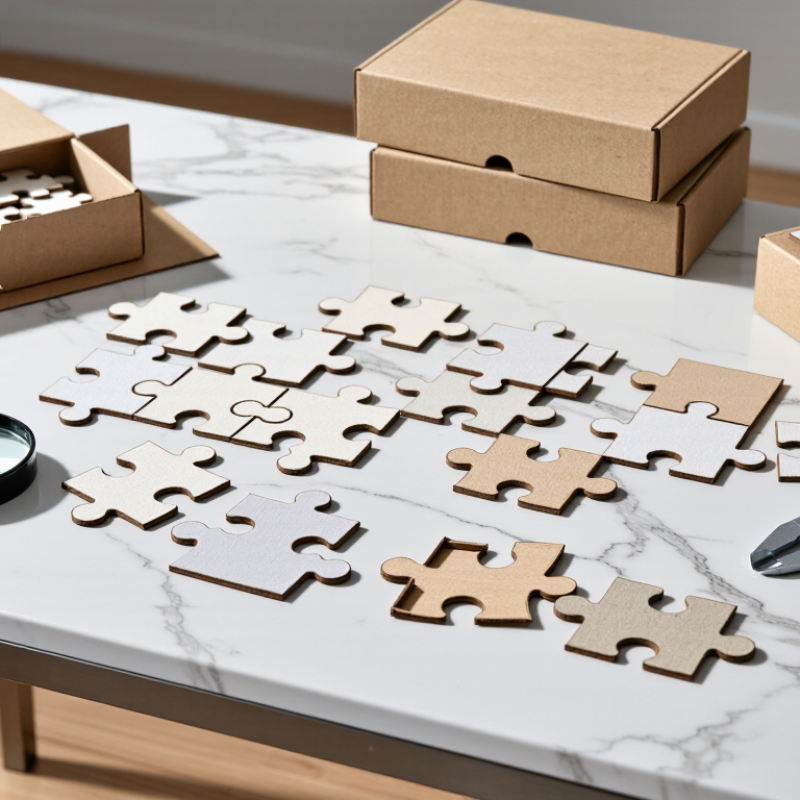
Blank puzzles are unfinished jigsaw boards prepared for custom printing, painting, education, or promotional projects. They usually use smooth chipboard, wood, or recycled paperboard. Wholesale buyers choose them because one base product supports many designs. A single purchase can serve schools, craft stores, event planners, and independent creators.
Market evidence supports this interest. Grand View Research valued the global board games market at approximately USD 13.83 billion in 2023. Its report also identifies growing demand for creative, educational, and social play products. Blank puzzles fit this shift, especially when buyers need local artwork or seasonal themes. The 2024 Toy Association consumer research also highlighted strong interest in screen-free play and family activities. That matters for retailers planning practical product lines.
Yet blank does not automatically mean cheaper. Printing setup, packaging, cutting accuracy, and rejected pieces can change the final cost. A careful buyer should request material thickness, piece-count tolerance, surface testing, and carton specifications. Ask for physical samples. Small flaws become expensive at scale. One overlooked issue is dust from poor cutting; it can affect both packaging and customer experience. Buyers should also compare shipping volume, minimum order quantities, and replacement policies. The perfect specification may still fail if the artwork prints poorly. Reflect on the whole supply chain, not only the unit price.

Wholesale buyers should evaluate blank puzzles beyond piece count and unit price. Board thickness, surface smoothness, and clean cutting directly affect customer experience. A 1.5–2.0 mm board usually offers better handling than thin stock. However, thicker material can increase freight costs and storage pressure. Request pre-production samples before approving a large order.
Printability also matters. A smooth, lightly coated surface supports clearer artwork and more reliable coloring. Check whether pencils, markers, and water-based paints perform as expected. Small test areas often reveal smearing or weak adhesion. Grand View Research’s 2024 market analysis identifies continued growth in the global jigsaw puzzle sector, with personalization supporting demand. That growth does not guarantee every blank format will sell.
Wholesale evaluation should include defect rates, packaging strength, carton dimensions, and replacement policies. Inspect ten or more random units from each sample carton. Record warped boards, missing pieces, rough edges, and inconsistent cuts. Circana’s U.S. toy industry reporting showed an 8% sales decline in 2023, reminding buyers to control inventory risk. Smaller trial orders may protect cash flow, even when unit prices are higher. It is an imperfect approach. Forecasts can still miss seasonal demand. Also verify material documentation and age-grade testing against applicable market requirements before shipment.
Wholesale buyers need blank puzzles that match real customer needs, not just attractive designs. A classroom may need durable learning tools, while a gift shop may prefer compact products. I have found ten practical types worth testing: classic jigsaw, wooden, large-piece, mini, shaped, map, photo, educational, puzzle postcard, and activity puzzles. Each format supports different printing, packaging, and price strategies.
Classic jigsaws suit families and general retailers, especially with 500 or 1,000 pieces. Wooden puzzles attract premium gift shoppers and craft-focused customers. Large-piece puzzles help young children and older adults handle pieces comfortably. Mini puzzles work well for travel counters and seasonal bundles. Shaped puzzles create stronger shelf appeal.
Map puzzles serve schools, museums, and geography programs. Photo puzzles suit personalized gifts and event orders. Educational puzzles can support letters, numbers, science, or local history.
Puzzle postcards fit low-cost promotions. Activity puzzles combine assembly with coloring or simple writing tasks.
Material thickness, print clarity, and piece accuracy should be checked before large orders. Child-focused products also need suitable safety testing and clear age guidance. Blank does not mean basic. It means flexible. Still, one format rarely serves every market. A small trial order may reveal weak packaging, confusing artwork areas, or pieces that feel too loose. That reflection matters. Buyers should compare customer feedback, return rates, and repeat-order potential before expanding their selection.
10 Best Blank Puzzles for Wholesale Buyers
How to Compare Quality, Customization, Pricing, and Order Requirements
Wholesale buyers should judge blank puzzles by measurable details, not attractive catalog photos. Check board thickness, edge strength, surface smoothness, and cutting accuracy. A reliable puzzle should lie flat and resist bending during packing. Examine three samples from different cartons. Small variations can reveal weak production control.
Customization affects both appearance and production risk. Ask whether suppliers support custom piece counts, shapes, finishes, packaging, and instruction inserts. Request a physical proof before approving large quantities. Matte surfaces reduce glare, while glossy coatings may show fingerprints more easily. For art-heavy designs, test color consistency under normal indoor lighting. It is easy to overvalue creative options. Retail customers still notice poor-fitting pieces first.
Pricing needs a complete comparison. Include tooling, sample fees, packaging, freight, and possible inspection costs. A low unit price may hide expensive carton limits or a high minimum order quantity. Ask about lead time, payment stages, reorder terms, and damaged-unit handling. Confirm carton dimensions and pallet details before booking transport. Practical buyers record every assumption in the quotation. I have found that written details prevent more disputes than friendly promises. Still, forecasts can be wrong, especially during seasonal demand. Leave room for a smaller trial order when possible.
Typical wholesale unit-price benchmarks for blank puzzle formats at an order quantity of approximately 500 units. Pricing is influenced by material, piece count, size, packaging, and customization requirements.
Lower-cost cardboard formats are usually easier to order in volume, while wooden, shaped, magnetic, and photo-insert formats generally require higher tooling, finishing, or packaging costs. Buyers should confirm board thickness, print method, sample approval, minimum order quantity, and production lead time before placing an order.
Wholesale blank puzzles can serve schools, retailers, event companies, and custom gift businesses. Reliable sourcing begins with a supplier’s material consistency, not attractive catalog photos. Request physical samples before discussing large quantities. Check the board thickness, surface finish, cut accuracy, and color neutrality. A clean cut should separate smoothly without crushed edges. Small flaws become expensive when thousands of units are packed.
Ask for documented production capacity, quality controls, and realistic lead times. Confirm the minimum order quantity, sample charges, packing method, and replacement process in writing. Suppliers should explain how they inspect warped boards, missing pieces, and damaged boxes. Request recent production photos or a short factory video. Independent trade references can reveal communication problems that sales messages hide. Do not accept vague answers.
My early buying checklist focused too much on price. That was a mistake. One low-cost sample had uneven pieces and weak packaging. The supplier corrected some issues, but the delay damaged our delivery schedule. Now I compare at least three samples under the same conditions. I also test stacking, humidity exposure, and repeated handling. These tests are simple, but useful. A dependable supplier welcomes practical questions and admits limitations. That response often matters more than a polished presentation. Leave room for improvement, because even a promising supplier may need clearer specifications.
| No. | Blank Puzzle Type | Typical Piece Count | Common Finished Size | Recommended Material | Typical Packaging | Typical Wholesale MOQ | Key Supplier Checks |
|---|---|---|---|---|---|---|---|
| 1 | Classic Rectangular Blank Puzzle | 100–1,000 pieces | Approximately 250 × 350 mm to 500 × 700 mm | 1.5–2.0 mm greyboard with smooth white coating | Paper box, polybag, or kraft envelope | 500–2,000 units | Check flatness, clean die-cut edges, piece count, and consistent interlocking fit. |
| 2 | Mini Travel Blank Puzzle | 24–100 pieces | Approximately 150 × 200 mm to 250 × 350 mm | 1.2–1.8 mm laminated puzzle board | Zip pouch, tuck box, or compact carton | 1,000–5,000 units | Verify portability, corner strength, pouch durability, and accurate piece sorting. |
| 3 | Large-Format Blank Puzzle | 300–2,000 pieces | Approximately 500 × 700 mm to 700 × 1,000 mm | 2.0–2.5 mm rigid greyboard | Reinforced carton with internal bag | 300–1,000 units | Inspect warping resistance, carton protection, pallet stability, and shipping damage rate. |
| 4 | Round Blank Puzzle | 50–500 pieces | Diameter of approximately 250–600 mm | 1.5–2.0 mm coated puzzle board | Round carton or square box with protective insert | 500–2,000 units | Confirm precise circular cutting, edge smoothness, and resistance to bending. |
| 5 | Shaped Blank Puzzle | 50–500 pieces | Approximately 200–600 mm across the widest point | 1.5–2.0 mm high-density puzzle board | Custom carton with die-cut support | 500–2,000 units | Review die-line accuracy, unusual edge sections, nesting efficiency, and sample consistency. |
| 6 | Kids’ Extra-Large Piece Puzzle | 12–48 pieces | Approximately 200 × 300 mm to 400 × 600 mm | 2.0–2.5 mm board with rounded or softened edges | Rigid box or resealable paperboard package | 1,000–5,000 units | Request material safety documentation, edge inspection, small-parts assessment, and age-grade guidance. |
| 7 | Double-Sided Blank Puzzle | 100–500 pieces | Approximately 300 × 400 mm to 500 × 700 mm | 1.5–2.0 mm laminated board with balanced surface layers | Box with internal sealed bag | 500–2,000 units | Test board separation, side identification, print adhesion, and piece compatibility on both sides. |
| 8 | Magnetic Blank Puzzle | 24–200 pieces | Approximately 200 × 300 mm to 400 × 600 mm | Flexible magnetic sheet laminated to coated paperboard | Flat box with protective sheet | 1,000–5,000 units | Measure magnetic holding strength, surface adhesion, curl, odor, and repeated-use durability. |
| 9 | Wooden Blank Puzzle | 20–300 pieces | Approximately 200 × 300 mm to 500 × 700 mm | 3–5 mm plywood or medium-density wood board | Kraft box, cotton bag, or rigid gift box | 300–1,000 units | Check splinters, laser or die-cut burn marks, moisture control, thickness tolerance, and odor. |
| 10 | Write-On and Colorable Blank Puzzle | 24–200 pieces | Approximately 200 × 300 mm to 400 × 600 mm | Uncoated or lightly coated white puzzle board | Paper sleeve, kraft box, or resealable bag | 1,000–5,000 units | Test pencil, crayon, and washable-marker performance, surface absorption, erasing, and smudge resistance. |
We are the most reliable and proficient jute goods manufacturer & supplier that helps businesses or individuals with various exportable agricultural commodities biz and jute goods by shipping them worldwide. Our right-time service ensures that whatever color and size of jute product you need, we can make it happen anytime and anywhere! Let’s keep our earth safer to live in!
Important link
Address
Bangladesh Address:
Fair Plaza (9th Floor), Plot : 3C, Section : 01, Mirpur, Dhaka:1216
UK Office:
242 Manor Road, Droylsden, Manchester, M43 6JD, United Kingdom.
Let's Talk
We are the most reliable and proficient jute goods manufacturer & supplier that helps businesses or individuals with various exportable agricultural commodities biz and jute goods by shipping them worldwide. Our right-time service ensures that whatever color and size of jute product you need, we can make it happen anytime and anywhere! Let’s keep our earth safer to live in!
Bangladesh Address:
Fair Plaza (9th Floor), Plot : 3C, Section : 01, Mirpur, Dhaka:1216
UK Office:
242 Manor Road, Droylsden, Manchester, M43 6JD, United Kingdom.