
How to Choose the Best Hamper Gift Box for Global Buyers?
Choosing the right Hamper Gift Box for global buyers requires more than attractive packaging. It demands careful research, practical testing, and respect for local preferences. A beautiful box can still fail if its contents melt during transit, arrive near expiry, or ignore cultural expectations.
John Ruhlin, gifting strategist and author of Giftology, offers a useful principle: “A gift should make the recipient feel known.” This idea matters across international markets. Buyers should examine product quality, ingredient transparency, packaging strength, delivery conditions, and presentation. A recipient in Singapore may value tropical flavours and compact packaging. Someone in Germany may expect precise labels, recyclable materials, and dependable delivery information. Small details shape trust.
Check the facts.
A reliable supplier should provide clear product specifications, batch information, shelf-life guidance, and shipping options. Seasonal items need extra attention. Chocolate, fresh fruit, glass jars, and delicate decorations may require temperature control or stronger protective inserts. Sustainable packaging also matters, but claims should be supported by evidence rather than vague green language.
There is no perfect global formula. That is the uncomfortable part. Even careful research can miss a regional preference or create unnecessary packaging waste. A trial order can reveal more than a polished catalogue. Test the Hamper Gift Box in its actual delivery route, inspect the unboxing experience, and ask recipients for honest feedback. The best choice balances emotional appeal with operational reliability, legal compliance, and measurable customer value. That balance is what turns a decorative gift into a dependable international gifting solution.
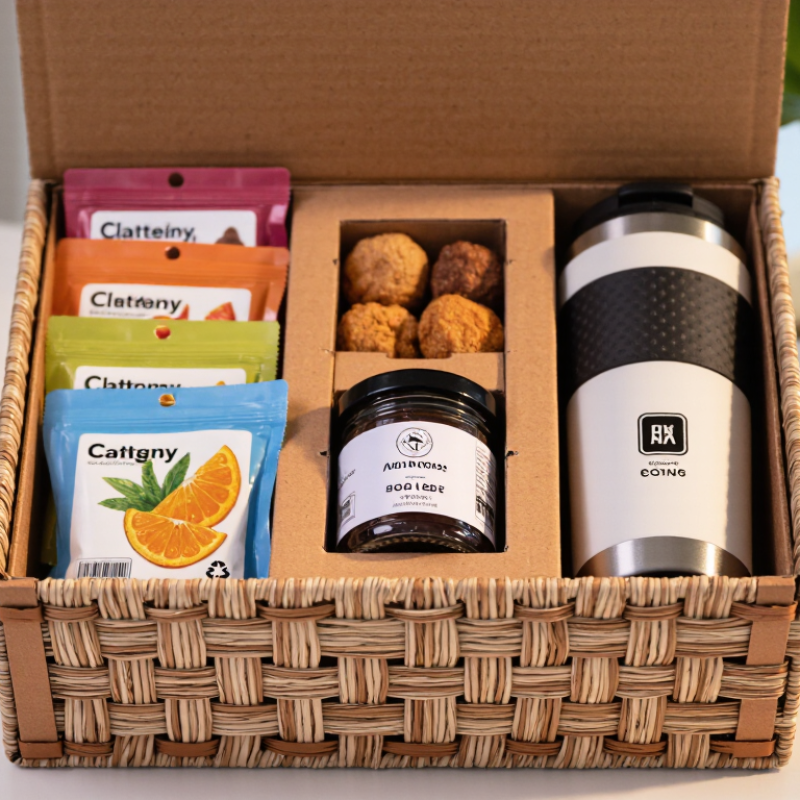
Table of Contents [Hide]
Understanding Hamper Gift Boxes and Their Global Appeal
How to Choose the Best Hamper Gift Box for Global Buyers?
Understanding Hamper Gift Boxes and Their Global Appeal
A hamper gift box combines several useful or indulgent items in one coordinated presentation. Its appeal crosses borders because it feels personal, convenient, and ready to share. However, “premium” does not mean oversized. A well-planned box may include tea, snacks, home accessories, or seasonal treats, with clear descriptions and practical packaging.
Global buyers usually assess more than appearance. The 2024 DHL E-Commerce Trends Report found that 72% of online shoppers consider sustainability when purchasing online. Therefore, recyclable inserts, reduced plastic, and compact shipping dimensions can influence trust. PwC’s Voice of the Consumer Survey 2024 reported that consumers would pay an average 9.7% premium for more sustainable products. That figure is useful, but not universal. Price still matters greatly in many markets.
A strong hamper should respect local habits. Check ingredient translations, allergy information, serving sizes, and climate-sensitive materials before listing products internationally. A gift designed for a cold European winter may feel unsuitable in a humid tropical region. Cultural details matter too, including colors, symbols, and holiday timing. Small choices help.
The box should survive real handling.
In supplier evaluations, I would request photographs, material specifications, and transit samples, not only digital mock-ups. A beautiful lid can hide weak internal protection. That is an easy mistake. Buyers also need transparent delivery estimates, return conditions, and accurate customs documentation. These details may seem ordinary, yet they often decide whether a thoughtful hamper arrives as a gift or as a problem.
How to Choose the Best Hamper Gift Box for Global Buyers? - Understanding Hamper Gift Boxes and Their Global Appeal
| Selection Dimension | Recommended Data or Specification | Why It Matters to Global Buyers | Practical Evaluation Points |
|---|---|---|---|
| Primary Gift Occasion | Festive gifting Corporate appreciation Birthday and anniversary Welcome and hospitality | The occasion determines the appropriate appearance, product mix, message card, and delivery timing. | Use elegant presentation for formal occasions, warm colors for celebrations, and neutral designs for business gifting. |
| Common Box Capacity | Small: 2–4 products Medium: 5–8 products Large: 9–15 products | Different household sizes, budgets, and gifting occasions require flexible assortment levels. | Confirm the internal dimensions after allowing space for dividers, protective filling, and product movement. |
| Typical Internal Size | Small: approximately 220 × 160 × 80 mm Medium: approximately 300 × 220 × 100 mm Large: approximately 380 × 280 × 120 mm | Standardized size options simplify product planning, storage, carton selection, and shipping calculations. | Measure the actual products, including lids, handles, glass containers, and other protruding parts. |
| Material Selection | Paperboard or corrugated board for lightweight presentation; wood or rigid board for premium positioning; molded pulp or paper inserts for product protection. | Material affects perceived value, durability, weight, recyclability, and international transport cost. | Select food-contact-safe materials when the box or insert may directly touch unpackaged food. |
| Protection Level | Use dividers for bottles and jars, cushioning for fragile items, and a fitted insert when products must remain fixed in transit. | International parcels may pass through multiple handling stages, increasing the risk of impact and compression. | Check that the packed box withstands stacking, vibration, and moderate drops without product displacement. |
| Shipping Weight Target | Aim for a compact gift set with a total packed weight of about 1–3 kg for standard parcel delivery, where product selection allows. | Lower packed weight can make cross-border delivery more economical and easier for recipients to handle. | Calculate both actual weight and volumetric weight because carriers may charge according to the higher billable value. |
| Packaging Format | Hinged rigid box, lift-off-lid box, magnetic-closure box, drawer box, or recyclable corrugated mailer. | The opening experience communicates gift quality, while the outer format influences storage and transport efficiency. | Choose a secure closure for parcel shipping and a reusable format when long-term household use is part of the value proposition. |
| Language and Labeling | Provide product names, ingredients, allergens, net quantity, storage instructions, country of origin, and importer information where required. | Labeling obligations differ by destination and product category, especially for food, cosmetics, alcohol, and supplements. | Prepare destination-specific labels and avoid relying only on decorative outer packaging for legally required information. |
| Customs and Product Restrictions | Review restrictions for food, liquids, plants, animal-derived materials, batteries, alcohol, and wooden packaging before dispatch. | A gift box can be delayed, returned, or refused if one included product is restricted in the destination market. | Confirm the correct customs description, declared value, harmonized classification, and supporting documentation. |
| Sustainability Features | Prefer recyclable paper-based structures, minimal mixed materials, water-based coatings, reusable inserts, and right-sized packaging. | Buyers increasingly assess the complete packaging system rather than only the appearance of the gift box. | Clearly identify material composition and check whether closures, laminates, magnets, ribbons, or foam complicate recycling. |
| Customization Level | Basic: standard box with label Medium: printed sleeve, card, or insert Premium: custom size, artwork, compartments, and finishing | A modular customization approach allows buyers to balance brand presentation, minimum order quantity, and cost. | Request a physical prototype or digital packaging proof before approving bulk production. |
| Color and Visual Style | Use neutral, seasonal, or culturally appropriate colors; provide a restrained design for multinational business gifting. | Color symbolism, religious references, and design preferences vary across regions and customer groups. | Test readability, contrast, and color consistency across digital artwork, printed packaging, and different lighting conditions. |
| Delivery Timing | Allow time for sampling, production, consolidation, customs clearance, and final-mile delivery; seasonal orders require additional buffer. | Gifts are often tied to fixed dates, so late arrival can reduce the value of an otherwise suitable hamper. | Confirm the destination, delivery terms, production lead time, and holiday calendar before placing the order. |
| Best Overall Choice | A right-sized, recyclable paper-based box with secure inserts, clear multilingual labeling, moderate packed weight, and a design suitable for multiple occasions. | This combination balances presentation, protection, regulatory readiness, sustainability, and international delivery practicality. | Compare the complete landed cost, including packaging, freight, duties, handling, and potential replacement of damaged goods. |