
• Home
  • About
    • jute Bag

      Eco-Chic and Durable – Perfect for Sustainable Living.

      Cashew Nut Bag

      Sustainable jute bag for lasting cashew nut freshness

      Cocoa Bag

      Eco-friendly jute bag for rich cocoa flavor preservation

      Coffee Bag

      Elegant, durable jute bag to keep coffee beans fresh and eco-friendly

      Hazel Nut Bag

      Eco-conscious jute bag for hazelnut freshness and quality

      Shea Nut Bag

      Durable jute bag for fresh, organic shea nuts

      Tote Bag

      Stylish, eco-friendly jute tote for daily essentials

      Wheat Bag

      Sustainable jute bag for optimal wheat freshness

    • Jute Yarn

      Eco-Chic and Durable – Perfect for Sustainable Living.

      Jute Rope

      Sustainable jute bag for lasting cashew nut freshness

      Jute Fabrics

      Eco-friendly jute bag for rich cocoa flavor preservation

      Hessian cloth

      Sustainable Hessian cloth suppliers

  • Products
  • Export Country
  • Blog

China Best Plant Based Laundry Detergent Manufacturers?

China’s plant-based laundry detergent sector is expanding with global demand for cleaner ingredients and clearer supply chains. Grand View Research’s Green Cleaning Products Market Report describes strong growth through 2030, driven by sustainability concerns and stricter product expectations. Euromonitor’s Home Care analysis also highlights premiumization, concentrated formulas, and ingredient transparency as important category trends.

But “plant-based” is not a complete quality guarantee. The phrase can describe one ingredient, not the entire formula. This matters.

This guide evaluates China’s best Plant Based Laundry Detergent manufacturers through practical and verifiable criteria. These include plant-derived surfactants, biodegradability testing, fragrance disclosure, packaging design, and batch consistency. Manufacturers should provide recent test reports, safety data sheets, and documented raw-material sources. ISO 14001 certification can indicate environmental management, while ASTM D6866 may help verify bio-based carbon content. However, certification scope must be checked carefully. A factory may hold certification for its site, not every detergent product.

Production experience also matters. Reliable suppliers should demonstrate stable filling lines, controlled mixing temperatures, and traceable quality inspections. A useful factory visit might reveal automated dosing equipment, sealed storage tanks, and labeled retention samples. Small details often expose larger risks.

No ranking is perfect. Pricing, minimum order quantities, export records, and private-label flexibility can change the final choice. The strongest supplier is not always the largest one. It is the manufacturer that can prove performance, safety, compliance, and consistency for your target market. This overview offers a practical starting point, while independent verification remains essential before commercial cooperation.
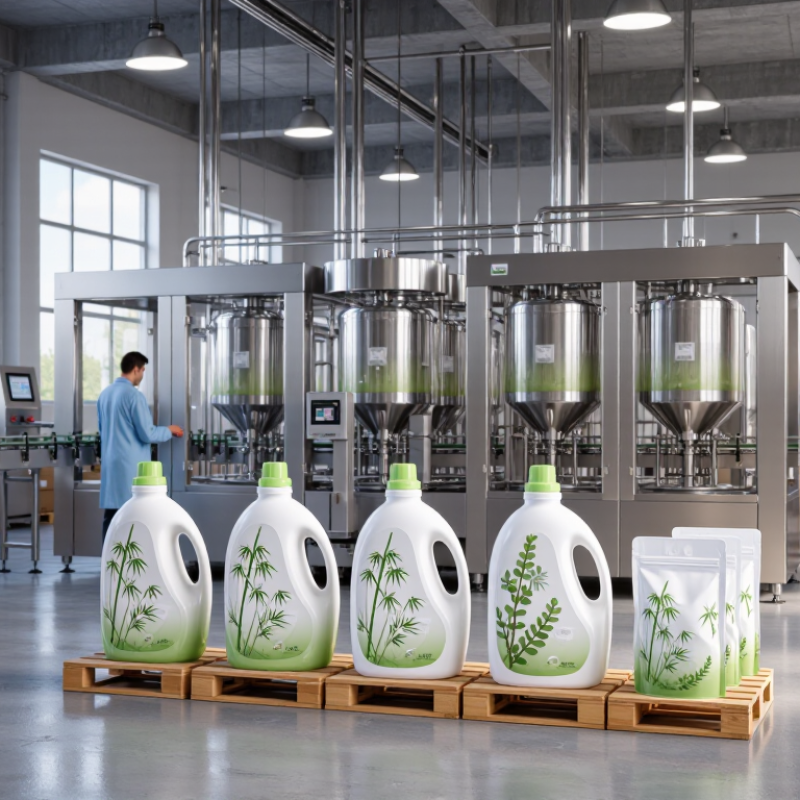
China Best Plant Based Laundry Detergent Manufacturers?

What Makes a Plant-Based Laundry Detergent Manufacturer the Best?

What makes a plant-based laundry detergent manufacturer the best? The answer is not simply a green label. Reliable manufacturers show how each ingredient is sourced, processed, tested, and documented.

The U.S. Environmental Protection Agency’s Safer Choice Standard evaluates every ingredient for human health and environmental safety. Strong manufacturers follow comparable discipline. They provide ingredient specifications, biodegradability results, aquatic-toxicity tests, and batch records. OECD Test Guidelines 301 are widely used to assess ready biodegradability. This matters when a detergent leaves foam, fragrance, and residues in household wastewater. Good factories also test cleaning performance in cold water, hard water, and heavily soiled fabrics. Real laundry is rarely perfect.

Independent data supports this direction. The European Environment Agency reports that household chemicals contribute to chemical pollution in water systems. Meanwhile, Grand View Research projects continued growth in the global laundry detergent market through 2030. Demand is rising, but growth alone proves nothing. A manufacturer still needs evidence.

From my experience reviewing private-label detergents, traceability often separates capable suppliers from attractive presentations. The best factories identify plant-derived surfactants by origin and concentration. They control fragrance allergens and preserve stability during transport. ISO 9001-based quality systems can improve consistency, although certification alone cannot guarantee a superior formula. That is an important weakness.

Buyers should request recent laboratory reports, safety data sheets, production videos, and retained samples. They should also compare washing results after repeated use, not after one demonstration. Small details reveal reliability.

How China’s Leading Manufacturers Develop Plant-Based Detergents

China’s leading plant-based laundry detergent manufacturers begin with careful ingredient selection. They commonly study plant-derived surfactants, enzymes, builders, and fragrance materials. The goal is effective cleaning with a lower environmental burden. However, plant-based does not automatically mean harmless or biodegradable. Each ingredient needs technical review, safety documentation, and performance testing.

Experienced manufacturers test formulas in real washing conditions. They compare cold-water cleaning, stain removal, rinsing, foam control, and fabric feel. Small details matter, such as water hardness and detergent residue on dark clothing. Quality teams also monitor pH, viscosity, microbial stability, and packaging compatibility. Reliable factories keep batch records and use controlled production procedures. Still, a formula may perform well in the laboratory but disappoint in a crowded household machine. This is where some development plans fall short.

Tips: Ask for ingredient specifications, test reports, and sample batches before ordering. Check performance on cotton, synthetics, and mixed fabrics. Request stability data from different temperatures. Packaging should protect the detergent from moisture and leakage. Avoid judging sustainability from the word “plant-based” alone. Clear evidence matters more than attractive claims.

Key Ingredients Used in China’s Plant-Based Laundry Products

China’s plant-based laundry products often begin with renewable surfactants. Alkyl polyglucosides, made from sugar and fatty alcohols, provide mild cleaning and good biodegradability. Soap-based surfactants may also appear, but they can leave deposits in hard water. Performance is not always gentle.

Many Chinese formulations use coconut- or palm-derived fatty alcohol sulfates, sodium citrate, and sodium carbonate. Sodium citrate softens water and helps surfactants work efficiently. Fermentation-derived enzymes are also common. Protease targets sweat and food stains, while amylase helps break down starch. Enzymes are powerful, but poor temperature control can reduce their activity.

Grand View Research’s 2024 green cleaning products analysis projects an 11.7% compound annual growth rate through 2030. That growth encourages manufacturers to replace petroleum-based inputs, yet “plant-based” remains an incomplete description. A detergent may contain plant-derived surfactants alongside mineral builders, preservatives, or synthetic fragrances. The label needs evidence.

Reliable manufacturers should provide ingredient origin records, biodegradability tests, allergen disclosures, and batch-level quality data. ISO-based laboratory methods can assess cleaning performance and aquatic toxicity. In practice, I would also check low-temperature washing results, residue on dark fabric, and packaging compatibility. One overlooked issue remains fragrance. Natural origin does not automatically mean low irritation.

China Best Plant-Based Laundry Detergent Manufacturers? – Key Ingredients Used in China’s Plant-Based Laundry Products

Representative concentration ranges of commonly used bio-based or plant-derived ingredient classes in liquid laundry detergent formulations. These figures are formulation ranges, not company or brand market-share data.

How to read the chart: Surfactants such as alkyl polyglucosides and methyl ester sulfonates provide the main cleaning action. Sodium citrate supports water softening, while enzymes target protein- and starch-based stains. Bio-based solvents, plant-derived soap, and naturally sourced fragrance materials are typically used at lower levels.

How to Evaluate Quality, Safety, and Environmental Standards

Choosing a plant-based laundry detergent manufacturer in China requires more than reading “natural” on a product sheet. Quality begins with traceable ingredients, stable formulas, and controlled production. Ask for full ingredient disclosures, safety data sheets, batch records, and recent third-party test reports. Details matter.

A reliable supplier should explain how plant-derived surfactants are sourced and processed. Check cleaning performance in cold and hard water, not only in laboratory conditions. Request tests for skin irritation, heavy metals, microbial stability, and biodegradability. Packaging also deserves attention. Recyclable materials help, but transport weight and refill options affect the real environmental footprint. An ISO 14001-certified factory may show stronger environmental management, yet certification alone is not proof of every claim.

Factory audits can reveal practical weaknesses, such as poor wastewater control, inconsistent filling, or unclear worker training. Ask to inspect production areas when possible. Compare water usage, energy records, waste handling, and chemical storage procedures. A manufacturer should welcome difficult questions and provide dated evidence. Be cautious with vague percentages and “zero pollution” promises. They are often too broad.

No supplier is perfect. A formula may reduce plastic waste but use energy-intensive packaging. A biodegradable ingredient may perform poorly in cold cycles. Record these trade-offs instead of hiding them. The strongest evaluation combines documents, factory observations, product testing, and honest follow-up discussions.

Choosing the Right Chinese Manufacturer for Your Business Needs

China Best Plant Based Laundry Detergent Manufacturers?

Choosing the right Chinese manufacturer starts with your business model, not a product catalog. A hotel supplier may need concentrated liquid, while a retail seller may require attractive small bottles. Ask about plant-based ingredient sources, formulation flexibility, minimum order quantities, and production capacity. Request samples from different batches. One sample is not enough.

A reliable factory should provide clear ingredient specifications, safety documents, test reports, and traceable batch records. Check whether its quality team tests cleaning performance, scent stability, viscosity, and packaging leakage. If you visit the facility, inspect mixing tanks, filling lines, storage areas, and wastewater controls. Clean floors do not prove everything, but neglected details can reveal weak management. Certification is useful, yet documents should match the actual factory and product.

Communication also affects your final cost. Confirm lead times, payment stages, carton dimensions, label requirements, and support for product adjustments. A manufacturer may promise fast delivery before checking raw material availability. That is a warning sign. Ask for a written production schedule and a sample approval process. Do not accept vague claims such as “100% natural” without supporting evidence. Plant-based formulas can still vary in cleaning power, fragrance, and shelf stability. The best partner will discuss these limits honestly and help you test the formula under real washing conditions, including cold water, hard water, and heavily soiled fabric.

China Best Plant Based Laundry Detergent Manufacturers? - Choosing the Right Chinese Manufacturer for Your Business Needs

Evaluation Dimension Objective Data or Reference Evidence to Request Business Relevance
Plant-Based Ingredient Content Require a clearly defined percentage or mass balance for plant-derived surfactants, solvents, builders, or fragrances. “Plant-based” should not be treated as a regulated single definition. Full ingredient list, supplier declarations, calculation method, and supporting raw-material documentation. Prevents vague sustainability claims and supports accurate product labeling.
Biodegradability Testing OECD 301 methods are widely used for evaluating ready biodegradability of organic substances. Test conditions and pass criteria must match the selected method. Independent laboratory report identifying the method, test substance, concentration, duration, and result. Helps substantiate environmental claims and compare formulations consistently.
Washing Performance Performance should be evaluated against a defined reference detergent, water hardness, temperature, dosage, fabric type, and stain set. Comparative test report with washing cycles, stain-removal results, dosage, and test conditions. Confirms that plant-derived ingredients do not compromise cleaning effectiveness.
Quality Management ISO 9001:2015 is an internationally recognized quality-management-system standard; certification does not itself guarantee product performance. Valid certificate, certification scope, issuing body, and latest audit status. Provides evidence of documented production and quality-control processes.
Environmental Management ISO 14001:2015 addresses environmental-management systems, including process controls and continual improvement. Valid certificate, site location, certification scope, and environmental objectives. Supports responsible sourcing and environmental compliance reviews.
Restricted Substances The formulation should be screened for substances restricted by the destination market, such as phosphates, certain preservatives, allergens, or intentionally added microplastics where applicable. Safety Data Sheet, full formulation review, restricted-substance declaration, and laboratory screening where required. Reduces regulatory, recall, and market-entry risks.
Destination-Market Compliance EU sales may involve Regulation (EC) No 648/2004 on detergents, while other markets may impose different labeling, ingredient, packaging, and chemical requirements. Market-specific compliance checklist, label artwork review, ingredient disclosure, and required technical files. Ensures the product is legally saleable in the intended country or region.
Packaging Sustainability Packaging claims should specify material type, recycled content where applicable, recyclability conditions, and package weight. Packaging specification, material declaration, recycled-content evidence, and packaging test results. Supports sustainability reporting and reduces shipping or leakage problems.
Batch Consistency Important control points include appearance, odor, pH, viscosity, active-matter content, density, and cleaning performance. Certificate of Analysis template, batch records, retention-sample policy, and finished-product specifications. Improves product reliability across repeated purchase orders.
Supply-Chain Traceability Critical raw materials should be traceable from approved supplier through production batch and finished-product shipment. Raw-material supplier list, lot-number system, batch records, and recall procedure. Makes quality investigations and corrective actions faster and more transparent.
Private-Label Capability Confirm whether the manufacturer can support formulation adjustment, fragrance selection, packaging development, artwork review, and production-scale validation. Development workflow, sample approval procedure, technical questionnaire, and change-control process. Helps align the product with the buyer’s positioning, target price, and sales channel.
Commercial Risk Review Evaluate lead time, payment terms, minimum order quantity, production capacity, inspection arrangements, and written quality agreements before ordering. Quotation, production schedule, service-level terms, pre-shipment inspection plan, and signed specifications. Provides a practical basis for comparing suppliers without relying only on price.

Note: Certification, biodegradability, plant-based content, and sustainability claims should be verified for the specific product, production site, batch, and destination market.

Shopping Basket