
The search for China’s Top 10 Biodegradable Container Suppliers reflects a larger packaging shift. According to UNEP’s Turning off the Tap report, packaging consumes about 36% of global plastic production. The report also warns that 85% of single-use plastic products may enter landfills or hazardous waste streams. These figures make material selection more than a marketing decision.
OECD’s Global Plastics Outlook reported 353 million tonnes of plastic waste globally in 2019. Only 9% was recycled. Biodegradable Containers may reduce long-term environmental pressure, but their performance depends on resin type, additives, heat resistance, and disposal conditions. “Biodegradable” is not automatically the same as “compostable.” A useful supplier review should examine test reports, factory audits, food-contact documentation, and certifications such as EN 13432, ASTM D6400, or applicable Chinese standards.
Details matter. Can a container hold hot soup without softening? Does its lid seal tightly during a 30-minute delivery? Are batch numbers traceable? These questions separate practical suppliers from attractive websites. This guide compares ten Chinese manufacturers through product range, production capability, customization, minimum order quantity, export experience, and quality controls. Supplier rankings remain imperfect. Public data can be incomplete, and certification scope may cover only one product line. Buyers should verify current documents directly before placing orders. That caution is necessary. Sustainability claims deserve evidence, not applause.
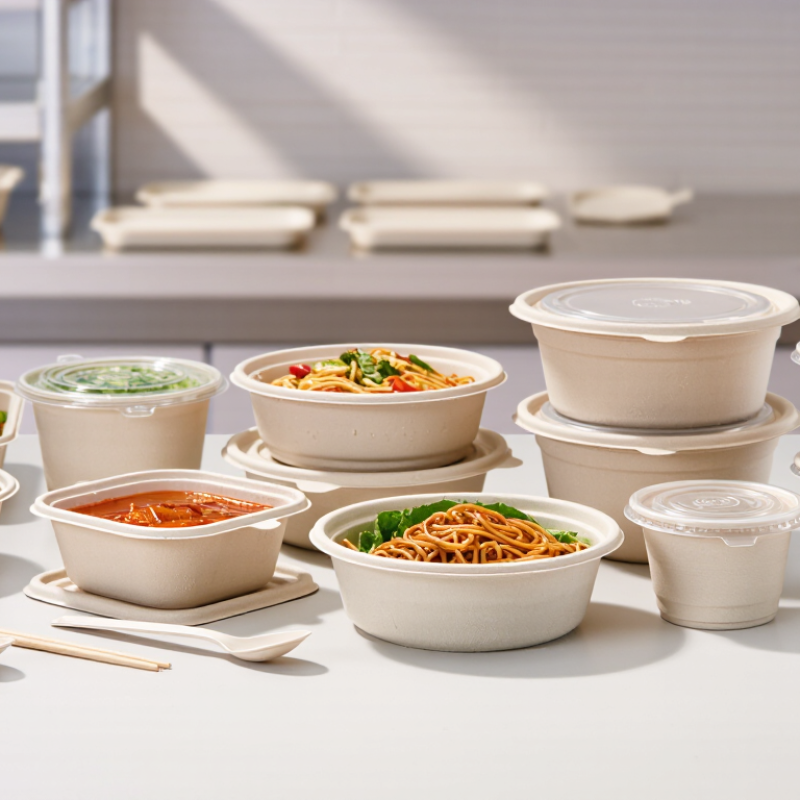
Biodegradable containers are packaging products designed to break down through natural biological activity. They may use plant fibers, starch-based materials, or other renewable inputs. Unlike ordinary plastic, they can reduce long-term waste when managed correctly. However, biodegradable does not mean “disappears anywhere.” Many containers need heat, moisture, oxygen, and industrial composting conditions. That detail matters. A container can look green while failing to decompose in a home compost bin.
When reviewing China’s top biodegradable container suppliers, buyers should examine material testing, food-contact safety, production controls, and disposal instructions. A reliable supplier provides clear specifications and traceable test records. Experience shows that vague claims often create problems during real use, especially with hot food, oily meals, or humid storage. Suppliers should also explain whether their containers are compostable, biodegradable, or simply recyclable. These terms are not interchangeable. The industry is improving, but it remains imperfect, and some environmental claims still need careful questioning.
Tips: Request samples before large orders. Test them with actual meals and storage conditions. Check breakdown requirements in your local waste system. Compare thickness, leakage resistance, and packaging damage. Choose practical performance over attractive green language.

Biodegradable containers are packaging products designed to break down through the action of microorganisms under suitable environmental conditions. Compostability standards help distinguish independently testable end-of-life performance from general “eco-friendly” claims.
The chart shows the main time limits used by recognized industrial compostability standards: disintegration within approximately 12 weeks and biodegradation within approximately 180 days. Actual performance depends on temperature, moisture, oxygen, microbial activity, container thickness, and access to an appropriate composting facility.
Reference framework: EN 13432, ASTM D6400, and AS 4736 compostability requirements. These limits are standards-based benchmarks and are not supplier or brand performance claims.
Choosing among China’s biodegradable container suppliers requires more than comparing quotations. Start with the material, not the brochure. Ask whether containers use bagasse, bamboo fiber, PLA, or another documented feedstock. Request composition records, food-contact test reports, and certificates tied to the actual factory. A certificate from a trading office proves little. Confirm the issuing body, test date, product code, and applicable market standard. This is where many buyers move too quickly.
During supplier evaluation, inspect production evidence. A video call can show molding lines, drying areas, storage conditions, and batch labels. An on-site audit is stronger, especially when moisture affects strength. Order samples from different production lots. Fill them with hot soup, oily food, and chilled items. Check leakage, warping, odor, lid fit, and stacking after transport. Record test temperature and holding time. Small details expose large weaknesses. Still, sample performance may not represent peak-season output. That limitation deserves attention.
Reliable suppliers explain minimum order quantities, tooling fees, lead times, and complaint procedures in writing. Ask how they trace resin, fiber, additives, and finished cartons. Clear batch records support quality investigations. Review export experience, packaging protection, and communication response times. Do not accept “100% biodegradable” without disposal conditions and test boundaries. Some products degrade only in controlled industrial facilities. I would score technical evidence above polished sales language. Price still matters, but the cheapest container can create higher waste through breakage. A practical evaluation sheet may reveal uncomfortable gaps.
China’s Top 10 Biodegradable Container Suppliers serve foodservice, retail, and delivery markets with molded fiber, bagasse, bamboo pulp, and starch-based materials. Their strongest products resist hot soup, oily food, and short-term refrigeration without plastic-like coatings. A practical buyer should request samples first. Check rim strength, lid fit, odor, and leakage after 30 minutes at 90°C. Small details matter.
Reliable suppliers usually provide factory photographs, material specifications, production capacity, and test reports from recognized laboratories. Ask whether compostability applies to the finished container, not only the raw fiber. Also verify food-contact compliance for the destination market. The top ten should explain mold design, pulp sourcing, moisture control, and quality inspection clearly. Production consistency matters more than attractive samples.
My evaluation would compare minimum order quantities, tooling fees, lead times, packing methods, and replacement policies. Some factories offer excellent prototypes but struggle with color variation or warped lids during mass production. That weakness deserves attention. A responsible supplier should disclose these limits and suggest realistic applications. Buyers can improve decisions by testing filled containers, stacked cartons, and refrigerated shipments before signing a long contract.
| Rank | Supplier Profile | Primary Container Types | Main Materials | Typical Applications | Common Certifications | Typical MOQ | Typical Lead Time | Export Capability |
|---|---|---|---|---|---|---|---|---|
| 01 | Supplier Profile A | Clamshells, trays, takeaway boxes | Bagasse fiber, molded pulp | Foodservice, catering, meal delivery | BPI, EN 13432, FDA food-contact documentation | 10,000–50,000 pieces | 25–45 days | North America, Europe, Asia-Pacific |
| 02 | Supplier Profile B | Bowls, cups, lids, plates | Paperboard, PLA lining, molded fiber | Restaurants, cafés, takeaway service | FSC chain-of-custody, BRCGS packaging, food-contact testing | 20,000–100,000 pieces | 20–40 days | Europe, Middle East, North America |
| 03 | Supplier Profile C | Produce trays, meat trays, inserts | Recycled molded pulp, recycled paper fiber | Fresh produce, food processing, retail packaging | ISO 9001, FSC, food-contact compliance | 30,000–100,000 pieces | 30–50 days | Europe, Australia, Southeast Asia |
| 04 | Supplier Profile D | Clear cups, dessert cups, lids | PLA, CPLA, bio-based polymer blends | Cold drinks, desserts, events | EN 13432, ASTM D6400, food-contact testing | 50,000–200,000 pieces | 25–45 days | Europe, North America, Oceania |
| 05 | Supplier Profile E | Takeaway boxes, soup containers, meal trays | Bagasse, bamboo fiber, water-based coatings | Hot food, soups, institutional catering | BPI, ASTM D6400, ISO 22000-related systems | 20,000–80,000 pieces | 30–45 days | North America, Europe, Middle East |
| 06 | Supplier Profile F | Bakery boxes, food trays, paper containers | Kraft paper, recycled paperboard, aqueous coating | Bakery, confectionery, retail food | FSC, ISO 9001, EU food-contact compliance | 10,000–60,000 pieces | 20–35 days | Europe, Asia-Pacific, North America |
| 07 | Supplier Profile G | Fruit trays, egg cartons, protective inserts | Recycled paper pulp, molded fiber | Agriculture, food logistics, e-commerce protection | FSC, ISO 9001, recyclable-packaging testing | 30,000–150,000 pieces | 30–55 days | Europe, Japan, South Korea, Southeast Asia |
| 08 | Supplier Profile H | Coffee cups, lids, sleeves | Paperboard, PLA, molded pulp | Coffee shops, beverage chains, events | FSC, PEFC, food-contact migration testing | 30,000–200,000 pieces | 25–40 days | North America, Europe, Australia |
| 09 | Supplier Profile I | Custom molded containers and inserts | Molded pulp, bamboo fiber, agricultural residue fiber | Consumer goods, electronics, specialty food | ISO 9001, FSC, customized compliance testing | 5,000–30,000 pieces | 35–60 days | Global project-based supply |
| 10 | Supplier Profile J | Cutlery packs, trays, small containers | Wood fiber, bamboo, PLA, paper | Quick-service restaurants, airlines, institutional catering | EN 13432, FSC, food-contact compliance | 50,000–300,000 pieces | 25–45 days | Europe, Middle East, North America, Asia-Pacific |
China’s top 10 biodegradable container suppliers should be judged by materials, products, certifications, and production capabilities. Common materials include bagasse, bamboo fiber, kraft paper, PLA, and molded pulp. Each material behaves differently under heat, moisture, and pressure. Bagasse suits takeaway boxes, trays, and plates. PLA works better for cold foods and clear lids. Molded pulp offers strong cushioning for food and retail packaging.
Product range matters, but consistency matters more. Check container thickness, lid fit, leakage resistance, and edge smoothness. Reliable factories usually provide pilot samples before mass production. Certifications may include FDA food-contact compliance, EU food-contact standards, BPI certification, or EN 13432 testing. Certification scope must match the exact material and product. A general factory certificate may not prove container-level compliance. Production capability also deserves close inspection. Review molding lines, printing equipment, testing rooms, daily capacity, and quality-control records. Some suppliers report impressive output but lack stable batch control. That weakness is easy to miss.
China Top 10 Biodegradable Container Suppliers: How to Select the Right Supplier for Your Business Needs
Choosing among China’s top biodegradable container suppliers requires more than comparing prices. Start with the material. Ask whether the container uses molded fiber, bagasse, PLA, or another verified compostable material. Request test reports, food-contact documentation, and certification records from recognized bodies. Do not rely on a logo printed in a catalog. Check the certificate number and issuing organization.
Samples should match your real operating conditions. Fill them with hot soup, oily food, or chilled desserts, depending on your business. Check leakage, softening, odor, lid fit, and stacking strength after transport simulation. A container that performs well for ten minutes may fail during a two-hour delivery. It happens. Ask suppliers for production samples, not only polished showroom samples.
Supplier reliability matters as much as product quality. Review factory capacity, raw material sources, quality-control steps, and export experience. A useful audit should examine molding areas, storage conditions, packaging, and batch records. Confirm minimum order quantities, lead times, printing limits, and replacement procedures in writing. Request a small trial order before signing a large contract. Communication can also reveal risks: unclear answers about composting conditions or changing specifications deserve attention. An impressive price may conceal inconsistent thickness, delayed delivery, or limited technical support. Your team should compare suppliers using the same checklist, while leaving room to question assumptions that looked reasonable at the beginning.
We are the most reliable and proficient jute goods manufacturer & supplier that helps businesses or individuals with various exportable agricultural commodities biz and jute goods by shipping them worldwide. Our right-time service ensures that whatever color and size of jute product you need, we can make it happen anytime and anywhere! Let’s keep our earth safer to live in!
Important link
Address
Bangladesh Address:
Fair Plaza (9th Floor), Plot : 3C, Section : 01, Mirpur, Dhaka:1216
UK Office:
242 Manor Road, Droylsden, Manchester, M43 6JD, United Kingdom.
Let's Talk
We are the most reliable and proficient jute goods manufacturer & supplier that helps businesses or individuals with various exportable agricultural commodities biz and jute goods by shipping them worldwide. Our right-time service ensures that whatever color and size of jute product you need, we can make it happen anytime and anywhere! Let’s keep our earth safer to live in!
Bangladesh Address:
Fair Plaza (9th Floor), Plot : 3C, Section : 01, Mirpur, Dhaka:1216
UK Office:
242 Manor Road, Droylsden, Manchester, M43 6JD, United Kingdom.