How to Choose the Best Thermal Print Paper?
Choosing the best Thermal Print Paper starts with the printer, not the package label. In real retail and warehouse work, a roll can look suitable yet feed poorly. Width, core diameter, roll length, and winding direction must match the device. A technician should check the printer manual before ordering. This simple step prevents skewed receipts, wasted labels, and avoidable service calls. I have seen attractive paper fail because its core was only slightly too large.
The coating matters as much as size. For receipts, smooth thermal sensitivity creates sharp text with less printer heat. For shipping labels, stronger top coatings resist rubbing, moisture, sunlight, and occasional freezer exposure. Ask suppliers for test data, not vague claims. Paper containing BPA or BPS may raise purchasing concerns, so confirm current regional requirements and supplier declarations. Storage also affects performance. Keep unopened rolls cool, dry, and away from direct light. Poor storage can produce faded images before the paper reaches customers. Not every “premium” roll deserves trust.
A reliable choice comes from controlled testing. Print a sample barcode, receipt, or label on each candidate roll. Check contrast immediately, then again after several days. Rub the print lightly, expose one sample to heat, and compare readability. Record jams, curling, dust, and customer-facing appearance. These observations give purchasing teams stronger evidence than marketing language. Certification and traceability add confidence, especially for food, healthcare, and logistics applications. Still, paper selection involves trade-offs. A highly sensitive coating may print clearly but fade faster in warm conditions. The best Thermal Print Paper is therefore the one that fits the printer, environment, lifespan, and responsible sourcing goals. This guide examines those factors with practical checks and honest limitations.
Identify Direct Thermal or Transfer Needs at 203–600 dpi
Choosing thermal paper starts with the printing method, not the roll’s appearance. Direct thermal paper reacts to a heated printhead and needs no ribbon. It suits receipts, shipping labels, and short-life tags stored indoors. Heat, sunlight, friction, and plasticizers can darken or fade it. Test a sample beside a window and near the intended scanner. Small checks matter. Transfer printing uses a ribbon to place ink onto the surface. It usually handles moisture, abrasion, chemicals, and outdoor exposure better. The face material still matters: coated paper gives sharper edges, while synthetic stock tolerates rough handling.
DPI should match the smallest useful detail. At 203 dpi, bold text and standard barcodes print efficiently for routine logistics. At 300 dpi, fine characters, compact labels, and two-dimensional codes usually gain cleaner definition. At 600 dpi, tiny text, dense graphics, and precise marks benefit from higher resolution, provided the printer, software, and scanner support it. More dpi is not automatically better. I once treated resolution as a quality guarantee; that was a poor assumption. A 600 dpi file on unsuitable paper can look softer than a well-calibrated 203 dpi print. Measure it. Check darkness, contrast, barcode readability, and label adhesion after handling. Paper selection becomes more reliable when storage temperature, print speed, ribbon settings, and scan distance are measured, not guessed.
Match Roll Width, Core Diameter, and Length to Printer Specifications
How to Choose the Best Thermal Print Paper?
Choosing thermal paper starts with the printer, not the paper shelf. Measure the required roll width carefully. A roll that is only a few millimeters wider may rub against the guides or fail to feed smoothly. Check the core diameter too. The core must fit securely on the printer holder without wobbling. Some printers accept small cores, while others require larger ones. Never guess from appearance.
Roll length also matters. Longer rolls reduce replacement time, but they may exceed the printer’s maximum outer diameter. This can create pressure inside the cover or strain the feed motor. Compare the roll’s full diameter with the printer specifications. Paper thickness affects this measurement. I once selected a long roll that technically fit the core, but its outer diameter was too large. The printer jammed repeatedly. That mistake changed how I check every order.
Tips: Record width, core diameter, length, and outer diameter before purchasing. Confirm the winding direction and test one roll first. Use a ruler, not memory. Keep paper dry and away from heat, because moisture can weaken feeding and reduce image clarity. If the printed text looks pale, the issue may involve coating quality, print-head temperature, or paper compatibility. Recheck the specification sheet. Small details matter.
How to Choose the Best Thermal Print Paper?
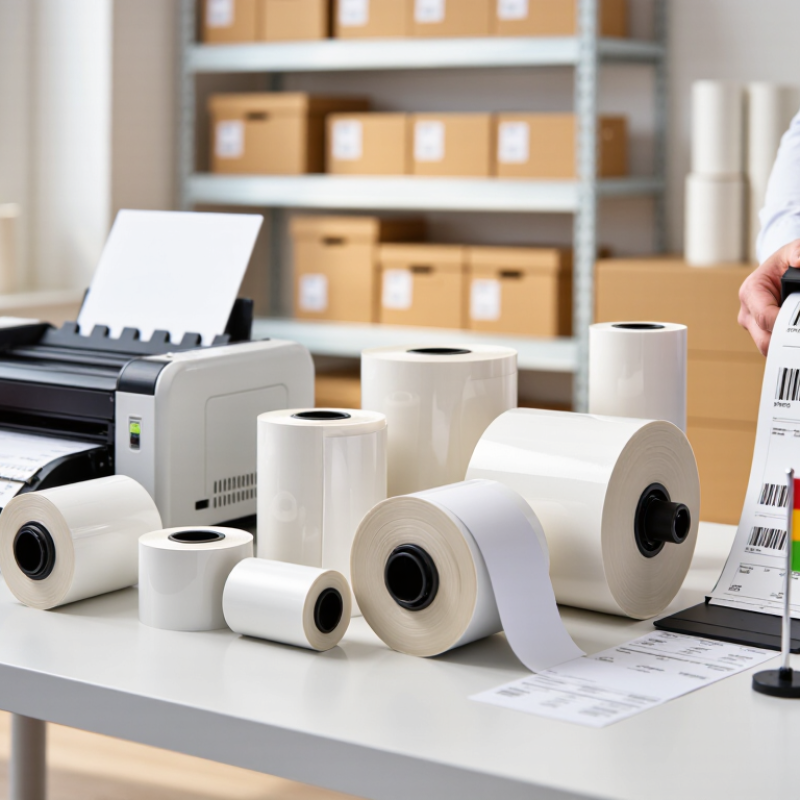
Match roll width, core diameter, and length to your printer specifications.
The chart shows representative thermal roll configurations commonly used for receipt, kiosk, and ticket printing. Roll width must match the printer's paper path, while the core diameter must fit the spindle or holder. Longer rolls increase printing capacity but also require the printer to support the larger outside diameter. Always confirm the printer's maximum roll diameter and supported paper length before purchasing.
Compare Basis Weight, Caliper, and Smoothness in g/m² and μm
How to Choose the Best Thermal Print Paper?
Choosing thermal paper starts with three measurable properties: basis weight, caliper, and smoothness. Basis weight, measured in g/m², indicates the paper’s mass per square meter. A higher value often provides better stiffness and opacity, but it may not suit every printer. Lightweight paper can feed easily, yet it may curl or feel fragile during handling.
Caliper describes thickness, measured in μm. Two papers with the same basis weight can have different calipers because their fibers and coating structures differ. Thicker paper may resist wrinkling and feel more substantial. However, excessive thickness can cause feeding problems in narrow printer paths. Check the printer’s specifications before choosing a high-caliper roll.
Smoothness matters at the thermal surface. A smoother coating usually supports more even heat transfer, sharper characters, and fewer pale spots. Rough paper can create uneven contact with the printhead. In practical testing, compare dark solid areas, fine text, and barcode edges. Measure samples under similar humidity, because moisture can change both caliper and feeding behavior. A paper listed at 65 g/m² and 70 μm may perform differently from another with identical figures. Manufacturing tolerance matters. So does storage.
I would not choose by numbers alone. A slightly lighter sheet may print more consistently in one machine. That is easy to overlook. Test several rolls, inspect the first and last labels, and record jams, contrast, and surface feel before making a purchasing decision.
Verify BPA Compliance Below the 0.02% REACH Threshold and BPS Safety
Choosing thermal print paper involves more than checking darkness and roll size. Chemical compliance deserves equal attention. In the European market, request evidence that BPA remains below the 0.02% REACH threshold by weight. Ask for a recent laboratory report, not only a supplier declaration. The report should identify the tested paper, production batch, method, and laboratory.
Check the details.
A “BPA-free” statement does not automatically confirm BPS safety. BPS is a separate chemical, so it needs separate evaluation. Ask whether BPS was tested, what concentration was detected, and which regulations the result covers. A suitable report should explain detection limits and sampling conditions. Vague wording creates uncertainty.
Handling conditions also matter. Store rolls away from direct sunlight, moisture, and hot machinery. During a trial, print a receipt and rub it with a dry finger. Then expose another sample to a warm car interior for several hours. Watch for fading, darkening, or residue transfer. These simple checks reveal weaknesses that paperwork may miss.
I would not rely on one certificate alone. Different markets may require different evidence, and supplier documents can become outdated. It is easy to overlook the coating, adhesive, or packaging. That gap deserves review. Choose paper with traceable test records, consistent print performance, and clear BPA and BPS information.