
• Home
  • About
    • jute Bag

      Eco-Chic and Durable – Perfect for Sustainable Living.

      Cashew Nut Bag

      Sustainable jute bag for lasting cashew nut freshness

      Cocoa Bag

      Eco-friendly jute bag for rich cocoa flavor preservation

      Coffee Bag

      Elegant, durable jute bag to keep coffee beans fresh and eco-friendly

      Hazel Nut Bag

      Eco-conscious jute bag for hazelnut freshness and quality

      Shea Nut Bag

      Durable jute bag for fresh, organic shea nuts

      Tote Bag

      Stylish, eco-friendly jute tote for daily essentials

      Wheat Bag

      Sustainable jute bag for optimal wheat freshness

    • Jute Yarn

      Eco-Chic and Durable – Perfect for Sustainable Living.

      Jute Rope

      Sustainable jute bag for lasting cashew nut freshness

      Jute Fabrics

      Eco-friendly jute bag for rich cocoa flavor preservation

      Hessian cloth

      Sustainable Hessian cloth suppliers

  • Products
  • Export Country
  • Blog

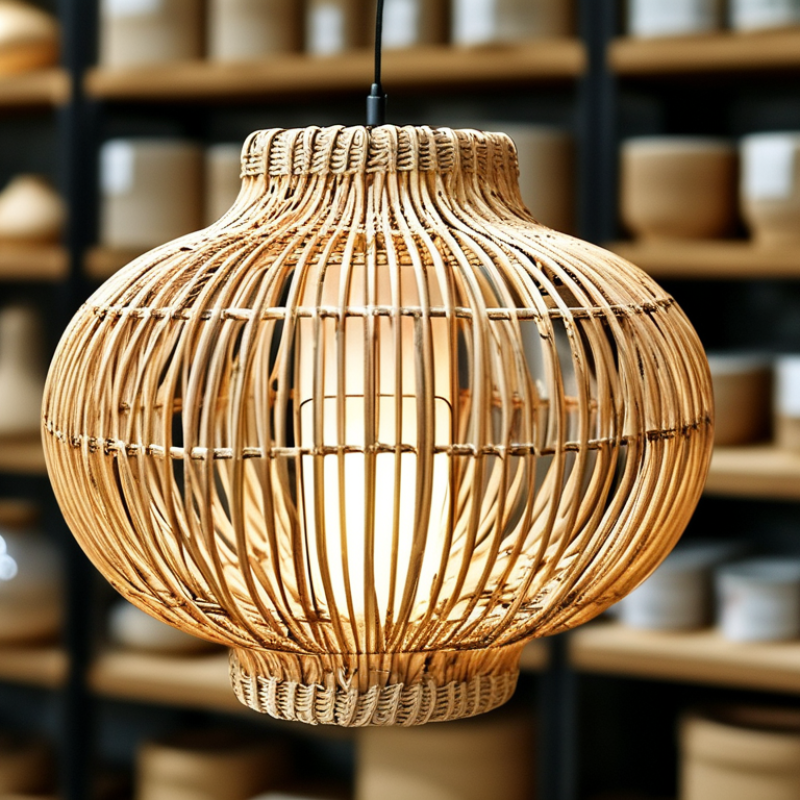
How to Source Rattan Lighting from Reliable Suppliers?

Sourcing Rattan Lighting can look simple until quality, safety, and delivery problems appear. A beautiful woven shade does not guarantee a dependable supplier. Experienced buyers inspect the material, production process, wiring, packaging, and communication before placing large orders.

Reliable sourcing begins with evidence. Request recent factory photographs, material specifications, product samples, and clear production timelines. Examine the rattan closely. It should feel dry, evenly shaped, and free from unpleasant odors, loose fibers, or visible mold. Ask how suppliers control moisture during storage and shipping. Small details matter.

Electrical components require equal attention. Confirm that sockets, cables, plugs, and switches meet the safety requirements of the destination market. Ask for relevant test reports and conformity documents, rather than accepting vague promises. An independent inspection can check dimensions, weave consistency, carton strength, and lighting performance before shipment.

Supplier conversations also reveal practical experience. Do they answer technical questions clearly? Can they explain replacement policies and quality-control steps? Do they provide stable lead times during busy seasons? A supplier may offer impressive samples but struggle with consistent mass production. That risk is easy to overlook.

Trust needs evidence.

Pricing should be evaluated carefully. Extremely low quotes may hide weaker rattan, unsafe components, poor packaging, or unexpected shipping costs. Compare complete quotations with the same specifications. Keep written records of approved samples and agreed tolerances.

No sourcing process is perfect. I have found that early assumptions often need revision. A careful buyer remains curious, documents every decision, and tests before scaling. This approach helps importers build safer, more reliable, and longer-term Rattan Lighting partnerships.
How to Source Rattan Lighting from Reliable Suppliers?

Define Rattan Origin and Legality Using FSC CoC or CITES Records

Reliable rattan lighting starts with evidence, not attractive product photos. Ask for the cane’s scientific name, harvest country, and collection region. The Food and Agriculture Organization reported that 420 million hectares of forest were lost between 1990 and 2020. That figure makes origin verification more than paperwork.

Check whether the supplier’s FSC Chain of Custody certificate covers rattan or other non-timber forest products. The certificate should match the legal company name, product scope, and invoice details. FSC certification can support traceability, but it does not prove every harvest permit. Request transport records, purchase invoices, and local harvesting authorization too. Small gaps matter. A certificate is not a magic shield.

CITES records are relevant when the declared rattan species appears in the CITES Appendices. Search the CITES Trade Database using the scientific name, origin country, and shipment year. If permits apply, compare permit numbers with customs documents. The database records reported international trade, not every domestic harvest. That limitation needs honest attention. During supplier audits, inspect bundled cane, moisture marks, lot codes, and warehouse labels. Photograph the same lot beside its documents. The UN FAO Global Forest Resources Assessment 2020 and FSC certification guidance provide useful reference points, but supplier claims still require independent checking. One practical weakness remains: names may differ between local traders and botanical records. Ask a qualified verifier before approving the order.

How to Source Rattan Lighting from Reliable Suppliers?

Define rattan origin and legality using FSC Chain of Custody or CITES records.

The chart shows which verification checkpoints each record type can directly support. FSC CoC records are useful for certified material claims and chain-of-custody validation. CITES records should be checked when the declared rattan species is CITES-listed or when national authorities require permits. National harvest, transport, and customs records remain important because FSC or CITES documentation does not replace all local legal requirements.

Verification sources: FSC certificate search and CITES species checklist. A value of 1 means the record type can directly evidence the checkpoint; 0 means additional documentation is required.

Screen Suppliers Through ISO 9001, Factory Audits and Export History

How to Source Rattan Lighting from Reliable Suppliers?

Screen Suppliers Through ISO 9001, Factory Audits and Export History

A supplier’s ISO 9001 certificate is a useful starting point, not a guarantee of perfect lighting. Verify the certificate number, scope, issuing body, and expiry date. The scope should cover manufacturing, assembly, or trading activities relevant to your order.

Ask for the supplier’s quality procedures and sample inspection records. Reliable teams can explain how they control rattan moisture, frame alignment, wiring, and surface finishing. During a factory audit, inspect the weaving area, drying space, electrical assembly line, and packaging station. Look for labelled materials, clean worktables, and traceable production records. Small details matter.

Do not rely on polished photographs.

Export history adds another layer of evidence. Request recent shipment records with sensitive information removed, then compare product descriptions, destinations, and shipment dates. Ask whether the supplier has handled similar volumes and packaging requirements. Contact two recent customers if permission is available. Their comments about damage rates, lead times, and corrective actions can reveal more than a sales presentation.

A supplier may pass an audit and still struggle during peak season. That risk deserves attention. Review capacity plans, backup material sources, and inspection checkpoints before placing a larger order. I would also test several samples under real handling conditions. One sample can hide inconsistent weaving, uneven coloring, or a loose socket. Quality systems help, but careful questioning remains necessary.

Specify Safety Compliance Under IEC 60598-1, CE/UL and IP Ratings

Reliable rattan lighting begins with safety evidence, not attractive samples. Ask suppliers to identify the exact IEC 60598-1 requirements covered by their test reports. These requirements address insulation, wiring, earthing, heat resistance, mechanical strength, and protection against electric shock. Rattan can dry, loosen, or sit too close to hot components. Request temperature test results for the shade, lamp holder, and nearby cable.

For CE or UL-related markets, verify certificates against the actual model, voltage, plug, and production site. A generic certificate is not enough. Check whether the report covers the complete luminaire, not only the electrical driver. For damp locations, confirm the declared IP rating and its test basis. IP44, for example, offers limited protection against splashing water, but it is not suitable for every outdoor installation. Ask for sample labels, wiring diagrams, user instructions, and traceable test dates. Documents can look professional and still be incomplete.

Tips: Inspect one opened sample. Look for tight terminals, protected cable entry, stable strain relief, and safe spacing around the bulb. Compare three production samples, because handmade shades may vary. Keep photos and inspection records. I would also repeat heat checks after packaging tests; this step is easy to overlook. Suppliers may promise compliance confidently, but independent verification remains the safer choice. Some requirements are unclear until the lighting is tested in its final assembled form.

How to Source Rattan Lighting from Reliable Suppliers? - Specify Safety Compliance Under IEC 60598-1, CE/UL and IP Ratings
Evaluation Dimension Required Specification What the Supplier Should Provide How to Verify It Rattan Lighting Considerations Priority
Applicable Safety Standard Conformity with IEC 60598-1, the general safety and performance standard for luminaires, plus any relevant product-specific Part 2 requirements. Test report identifying the exact luminaire model, rated voltage, frequency, construction, applicable standards and test results. Check that the report is issued by a competent, independent laboratory and that the tested construction matches the production sample. Confirm that the rattan shade, metal frame, lampholder, cable entry and strain relief are included in the assessed construction. High
European Market Compliance CE marking supported by a valid EU Declaration of Conformity and applicable EU legislation, such as the Low Voltage Directive for relevant voltage ranges and EMC requirements. Signed EU Declaration of Conformity, technical documentation, risk assessment and applicable test reports. Verify the legal manufacturer or importer details, product model, directives, harmonized standards and declaration date. CE is a manufacturer declaration of conformity; it is not, by itself, proof of independent laboratory certification or product quality. High
North American Market Compliance UL or another recognized North American certification appropriate to the intended United States or Canadian market and product type. Certification file or listing information, model identification, electrical ratings and installation instructions. Confirm the certification status through the relevant certification organization and ensure the marking applies to the complete luminaire, not only a component. Do not accept a component-level mark as evidence that the finished rattan pendant or table lamp is certified. High
Ingress Protection Specify an IP rating according to IEC 60529 based on the installation location. IP20 is generally for dry indoor areas; higher ratings are needed where dust or water exposure exists. IP test report stating the complete model, test method, rating and mounting orientation. Check that the IP rating covers the complete assembled luminaire and is consistent with the installation instructions. A woven rattan shade may allow air and particles to pass through; the rating of the electrical enclosure must not be assumed from the shade design. High
Electrical Ratings Clearly stated rated voltage, frequency, maximum wattage, lamp base, protection class and compatible light-source type. Product specification sheet, rating label artwork, wiring diagram and installation manual. Compare documents with the sample, internal wiring and intended destination-market power supply. Use a low-heat LED light source within the stated wattage limit and prevent the lamp from touching the rattan material. High
Thermal and Fire Risk Demonstrated control of accessible surface temperatures and heat accumulation during normal and abnormal operation. Thermal test results, maximum lamp wattage, minimum clearance requirements and approved lamp types. Perform a pre-shipment heat test using the specified lamp and inspect for discoloration, scorching, deformation or odor. Natural rattan is a combustible decorative material. The supplier should define clearance from the light source and prohibit unsuitable high-temperature lamps. High
Mechanical Construction Secure frame, shade attachment, suspension system, fasteners and ceiling canopy capable of supporting the product safely. Assembly drawing, rated suspension load, installation hardware list and mechanical inspection records. Check pull resistance, joint stability, sharp edges, loose fibers, fastener security and the independent support of the electrical cable. The electrical cable must not carry the weight of the rattan shade unless the design and certification specifically permit it. High
Material and Surface Treatment Consistent rattan species, moisture condition, coating system and treatment process suitable for the intended indoor or covered outdoor environment. Material specification, moisture-control procedure, coating details and batch inspection criteria. Inspect representative samples for mold, pests, excessive moisture, cracking, unstable dye or coating transfer. Natural material variation is expected, but excessive moisture or poor drying can lead to odor, mold, deformation and shortened service life. Medium
Wiring and Components Recognized or documented electrical components with suitable insulation, temperature rating, strain relief, earthing and terminal protection. Component datasheets, wiring diagram, cable specification, lampholder details and inspection records. Verify cable cross-section, insulation condition, terminal security, polarity, earth continuity where applicable and strain-relief performance. Rattan must not obstruct ventilation or conceal damaged wiring. Cable routing should avoid direct contact with hot surfaces and sharp metal edges. High
Quality-Control System Documented incoming, in-process and final inspections with traceability by purchase order, production batch and model number. Quality-control plan, inspection checklist, defect classification, corrective-action records and sample approval process. Request recent anonymized inspection records and compare approved samples with mass-production units before shipment. Use measurable acceptance limits for shade diameter, color variation, weave density, electrical function and structural alignment. High
Documentation and Labels Durable rating label, installation instructions, safety warnings, cleaning guidance and destination-market language requirements. Final artwork, user manual, packaging specification and product traceability information. Confirm that the label shows the correct model, input rating, lamp limit, manufacturer or importer information and required conformity marks. Include warnings against covering the luminaire, exceeding the maximum wattage and installing it in wet locations unless the IP rating allows it. High
Pre-Shipment Inspection Independent or buyer-approved inspection before shipment, using an agreed sampling plan and defect criteria. Inspection report with photographs, electrical test results, carton quantities, dimensions and nonconformity status. Approve shipment only after critical safety defects are closed and the inspected sample matches the approved golden sample. Inspect both the decorative rattan finish and hidden safety elements, including cable anchorage, lampholder fit and canopy assembly. High
Practical sourcing rule: request compliance documents for the exact finished model, verify the intended destination market, and treat CE, UL certification and IP ratings as separate requirements rather than interchangeable claims.

Approve Samples Against 8–12% Moisture and AQL 2.5 Quality Targets

Reliable rattan lighting suppliers should prove quality before mass production begins. Request material records, production photos, and a physical sample from the actual workshop. Do not approve a sample based on appearance alone. Rattan can look dry while retaining hidden moisture inside its core.

Set an 8–12% moisture target for the rattan components, using a calibrated moisture meter at several points. Check the rim, joints, thicker bends, and areas near the socket opening.

Ask the supplier to condition samples in a controlled room before testing. Record the readings with the inspection date and sample location.

My early checks were too optimistic.

One attractive sample later developed slight cracking after storage.

AQL 2.5 should support the final inspection, not replace process control. Define acceptable defects clearly, including loose weaving, sharp splinters, uneven staining, weak joints, and damaged wiring.

Use an agreed sampling plan and separate critical, major, and minor defects.

AQL 2.5 does not mean zero defects. It means the shipment is judged against a statistical acceptance level.

Inspectors should compare production pieces with the approved sample under consistent lighting. Keep one sealed reference sample for comparison. Small color differences may be acceptable, but unstable frames are not. Supplier reliability becomes clearer when corrective actions are documented, verified, and repeated checks show improvement.

Contract MOQ, Lead Time, Incoterms, Warranty and Pre-Shipment Testing

How to Source Rattan Lighting from Reliable Suppliers?

Contract MOQ, Lead Time, Incoterms, Warranty and Pre-Shipment Testing

A reliable supplier should explain MOQ in writing, not only quote one attractive sample price. Ask whether the MOQ applies per design, color, or total order. For a small hospitality project, negotiate mixed models within one carton quantity. Confirm packaging charges, spare parts, and sample fees separately. Vague MOQ terms can damage your budget later.

Lead time should show each stage clearly. Request dates for material preparation, weaving, wiring, inspection, and dispatch. A supplier promising ten days may exclude weekends, testing, or port delays. Incoterms must also be stated on the quotation. Confirm who handles export documents, insurance, inland transport, and risk transfer. Never assume delivery responsibility from a casual phrase like “shipping included.”

The warranty needs practical details. Ask for its duration, covered defects, claim evidence, response time, and replacement process. A useful agreement may cover loose weaving, damaged wiring, and finish problems under normal use. Pre-shipment testing should include visual checks, power-on testing, cable inspection, and packaging review. Request dated photos, test records, and carton measurements before payment release. An independent inspection adds confidence, especially for larger orders. It is not perfect. I have seen inspections miss damage hidden beneath protective foam, so random carton opening still matters. Keep approved samples, signed specifications, and correction photos together. Clear records make supplier performance easier to judge.

Shopping Basket