
A Brass Elbow may look like a small part, but a poor match can mean leaks, restricted flow, or costly rework. Choosing one takes more than checking whether its threads fit. Pipe size, connection type, operating pressure, temperature, and fluid compatibility all matter.
Material supply is worth considering, but broad commodity figures cannot verify a fitting’s quality. The USGS Mineral Commodity Summaries 2024 estimated global copper mine production at about 22 million metric tons in 2023. That figure describes the raw-material market, not the performance of any elbow. For technical checks, ASME B16.15 covers cast copper-alloy threaded fittings in Classes 125 and 250. ASTM B62 also specifies requirements for copper-alloy sand castings. These references can help readers ask better questions, though the applicable standard depends on the product and installation.
Small details matter. A fitting’s nominal size may not tell you its actual thread form or dimensions. This guide presents seven practical checks, from confirming the connection and pressure rating to reviewing alloy, corrosion exposure, and supplier documentation. It also explains when a brass elbow may not suit the service conditions. Specifications are useful, but they are not a substitute for verifying the exact product. That step is easy to overlook.
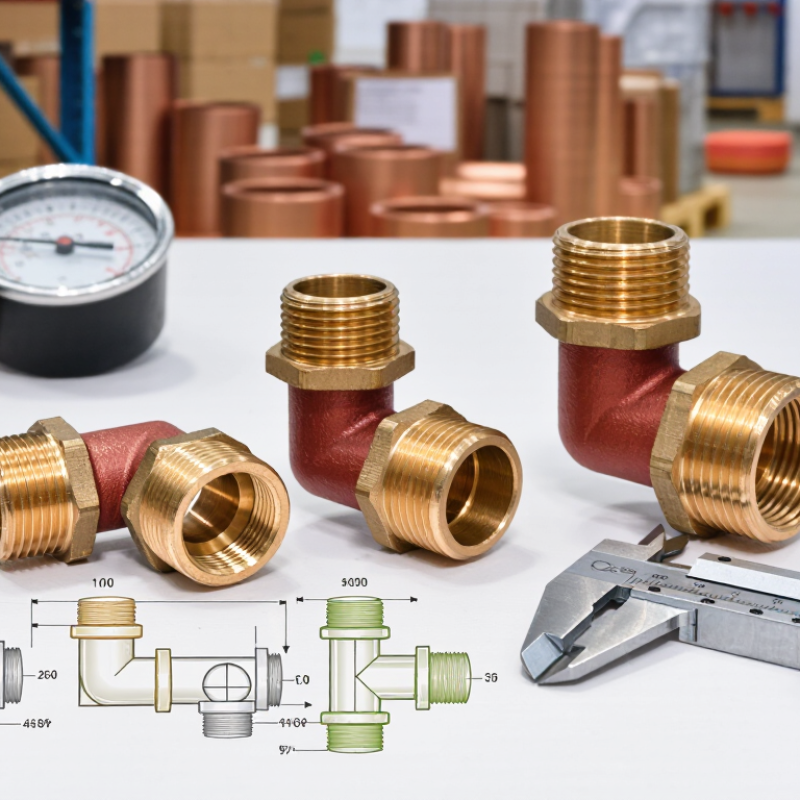
A brass elbow should match the job, not just the pipe angle. Is it redirecting water in a home plumbing line, connecting an instrument, or routing air through equipment? Each use brings different demands. A 90-degree elbow can save space, while a 45-degree fitting may help create a gentler route. Start by checking the fluid or gas, expected pressure, operating temperature, and how often the system cycles. Small details matter. Pressure and temperature ratings depend on the specific fitting and connection type, so check the product documentation rather than assuming all brass elbows perform alike.
Also consider the surrounding conditions. Damp locations, water chemistry, vibration, and limited access can affect service life and maintenance. For water systems, confirm that the fitting material is suitable for the water and intended application. Check thread type, size, and connection compatibility; a fitting that almost matches can still leak or strain the joint. Not just the angle. Think about installation space and whether tools can reach the connection later. It is easy to focus on the elbow itself and overlook the rest of the assembly. Compare its documented ratings with the system’s actual operating conditions, and leave a little margin where practical.

Choosing a brass elbow starts with the pipe size, not the fitting’s outside appearance. Pipe sizes are often nominal, so measure the existing line and check its stated size. A mismatch can restrict flow or leave too little thread engagement. Small differences matter.
Next, identify the thread type. NPT threads taper and seal as they tighten, while BSP threads follow a different standard and may not mate correctly. Check whether the elbow has male or female threads, too. Never force a connection that binds early. It is worth admitting that two fittings can look nearly identical and still be incompatible.
Then match the connection style to the tubing and installation. A threaded elbow suits a compatible threaded pipe; compression fittings need the correct tube diameter and properly seated ferrule. Flare connections require a matching flare angle and prepared tube end. For soldered or other specialized joints, confirm that the fitting is designed for that method. Check the system’s pressure, temperature, and fluid requirements against reliable product specifications. Dry-fit parts when appropriate, and inspect for cross-threading before applying sealant. A careful second check can prevent leaks behind a cabinet or inside a wall.
| Tip | Selection Factor | What to Check | Practical Guidance |
|---|---|---|---|
| 1 | Confirm the required size | Identify the nominal pipe or fitting size on both ends of the elbow. Check whether the two ends need to be the same size or different sizes. | Pipe-thread size is nominal and does not equal the measured outside diameter. For example, a 1/2-inch NPT thread has an outside diameter of about 0.84 inch. Use a thread gauge or sizing chart when markings are unavailable. |
| 2 | Match the thread standard | Determine whether the connection uses NPT, BSPT, BSPP, or another specified thread standard. | NPT and BSP threads differ in thread form and pitch and generally should not be treated as interchangeable. BSPT is tapered; BSPP is parallel. Verify the fitting standard before ordering or assembly. |
| 3 | Choose the right sealing method | Check where the joint is designed to seal: on the threads, at a gasket or O-ring, or at a separate fitting seat. | Tapered pipe threads commonly seal at the threads and may require a compatible thread sealant. Parallel threads typically need a washer, O-ring, or other designed sealing face. Follow the fitting instructions. |
| 4 | Select the connection style | Confirm whether each end should be female threaded, male threaded, compression, or another connection type. | Use compression ends for compatible tubing and the specified nut and ferrule. A threaded elbow will not directly replace a compression fitting unless an appropriate adapter is used. |
| 5 | Check the elbow angle and orientation | Verify the required direction of flow and whether the layout calls for a 90-degree elbow or another angle. | A 90-degree elbow turns a line through a right angle. Check the fitting’s end orientation and available installation space, especially where a swivel or nut needs room to rotate. |
| 6 | Verify material and fluid compatibility | Consider the fluid, operating environment, and any applicable plumbing or system requirements. | Brass is used in many water, air, and general-purpose applications, but compatibility depends on the alloy and service conditions. Confirm suitability for the specific fluid, including potable-water requirements where relevant. |
| 7 | Check pressure, temperature, and installation limits | Compare the fitting’s published ratings with the system’s maximum operating pressure and temperature. | Ratings vary by fitting design, size, connection type, and temperature. Use the manufacturer’s specifications for the exact fitting, and avoid overtightening, which can damage threads or sealing surfaces. |
Before installation: Confirm the size, thread standard, connection style, material suitability, and published pressure and temperature ratings for the exact brass elbow and its mating components.
A brass elbow’s grade affects strength, corrosion resistance, and how well it handles forming. The Copper Development Association’s alloy data lists C26000 brass at 68.5–71.5% copper. That figure helps identify the alloy, but it does not prove an elbow suits a particular system. Check the fitting’s stated material grade and the applicable standard. For example, ASME B16.15 covers cast copper-alloy threaded fittings in Class 125 and Class 250. Class numbers are not pressure ratings in psi.
Small distinction. Big consequences.
Compare pressure and temperature limits together. A published pressure rating may change as operating temperature rises, so check the rating table for the exact fitting material, size, and standard. Do not use a room-temperature maximum as the allowable pressure at higher temperatures. Also confirm the elbow’s thread type and connection details; a mismatch can cause leaks even when the grade looks right. A useful, imperfect rule: compare only ratings based on the same standard and conditions. If a supplier’s data sheet omits temperature limits or material identification, ask for clarification before specifying the part. I would double-check rather than infer.
A brass elbow must suit both the pipe and the fluid; matching thread size alone is not enough. Check the elbow’s alloy, pressure rating, and temperature limit against the system specifications. Fluid chemistry matters, too. Chlorides, ammonia, and some treatment chemicals can attack copper alloys, while hot or fast-moving water may accelerate wear. The Copper Development Association’s Copper Tube Handbook discusses water chemistry and corrosion; use it as a reference, not a substitute for checking the actual fluid and operating conditions.
Tips: Identify the pipe material and fluid before selecting the fitting. For steel-to-brass connections, assess galvanic corrosion risk, especially where moisture remains around the joint. For plastic pipe, use a compatible transition fitting and follow its installation instructions. Ask the supplier for written compatibility data when handling glycol mixes, cleaning solutions, or treated water. Small details matter.
NACE International’s 2016 IMPACT study estimated global corrosion costs at US$2.5 trillion annually, or about 3.4% of global GDP. That figure covers many industries; it does not predict an elbow’s service life. Still, it shows why material selection deserves care. One uncertainty remains: fluid chemistry can change over time, so review test results and maintenance records rather than relying on the original specification alone.
A brass elbow may look simple, but its alloy, finish, and documentation affect service life. Check the stated alloy grade and confirm the fitting suits the fluid, pressure, and temperature in your system. For threaded fittings, verify the applicable dimensional standard, such as ASTM B16.15, and inspect threads for clean, even crests. Small details matter. A certificate is useful only when it identifies the product and its intended application.
For potable-water use, look for applicable NSF/ANSI/CAN 61 and NSF/ANSI/CAN 372 certification, and confirm the exact fitting is covered. Do not rely on a supplier’s general claim alone; request traceable test or compliance documents. The NACE International IMPACT study estimated corrosion costs at US$2.5 trillion worldwide in 2013, about 3.4% of global GDP. That figure covers many industries, not brass elbows specifically, but it shows why material selection and corrosion control deserve attention.
Plan maintenance around the operating environment. Check joints for green or blue deposits, dampness, mineral buildup, and movement after temperature changes. Record inspection dates and replace fittings showing persistent leakage, damaged threads, or visible dezincification. Water chemistry can change the risk, so a universal inspection interval is hard to recommend. That uncertainty is worth admitting. A qualified plumbing or materials professional can help assess unusual fluids, mixed metals, or recurring failures.
Lead-content limits are one practical check when selecting brass elbows for potable-water systems in the United States.
How to use this: For potable-water service, confirm that the exact fitting is suitable for the application and check current product certifications, such as NSF/ANSI/CAN 61 for health effects and NSF/ANSI 372 for lead content. The federal lead-free definition sets a 0.25% weighted-average limit for wetted surfaces and a 0.20% limit for solder and flux. These are regulatory limits, not recommended material targets; requirements can vary by location and application.
Source: U.S. Safe Drinking Water Act lead-free definition, 42 U.S.C. § 300g-6.
We are the most reliable and proficient jute goods manufacturer & supplier that helps businesses or individuals with various exportable agricultural commodities biz and jute goods by shipping them worldwide. Our right-time service ensures that whatever color and size of jute product you need, we can make it happen anytime and anywhere! Let’s keep our earth safer to live in!
Important link
Address
Bangladesh Address:
Fair Plaza (9th Floor), Plot : 3C, Section : 01, Mirpur, Dhaka:1216
UK Office:
242 Manor Road, Droylsden, Manchester, M43 6JD, United Kingdom.
Let's Talk
We are the most reliable and proficient jute goods manufacturer & supplier that helps businesses or individuals with various exportable agricultural commodities biz and jute goods by shipping them worldwide. Our right-time service ensures that whatever color and size of jute product you need, we can make it happen anytime and anywhere! Let’s keep our earth safer to live in!
Bangladesh Address:
Fair Plaza (9th Floor), Plot : 3C, Section : 01, Mirpur, Dhaka:1216
UK Office:
242 Manor Road, Droylsden, Manchester, M43 6JD, United Kingdom.