
Choosing among China’s top 10 reishi mushroom extract suppliers requires more than comparing website claims. A credible supplier should show cultivation details, extraction methods, batch records, and independent laboratory results. These details help buyers understand what enters each brown powder, from fruiting body material to polysaccharide concentration.
This guide examines suppliers through practical purchasing criteria. It considers ingredient traceability, production capacity, quality systems, certificates, minimum order quantities, lead times, and export experience. A reliable company should provide a current certificate of analysis, heavy metal testing, microbiological results, and clear labeling information. GMP or equivalent manufacturing controls also deserve attention, especially for brands serving regulated markets.
No ranking remains perfect.
Supplier capabilities can change with new equipment, harvest seasons, or ownership changes. Public information may also be incomplete. Therefore, the “top 10” list should function as a starting point, not a final verdict. Buyers should request samples, verify documents directly, and compare test results before signing contracts. Small differences matter. One supplier may offer a lower price, while another provides stronger traceability or steadier batch consistency. The best choice depends on the intended product, target market, formulation needs, and compliance requirements. This balanced approach supports informed sourcing and reduces the risk of relying on polished marketing alone.
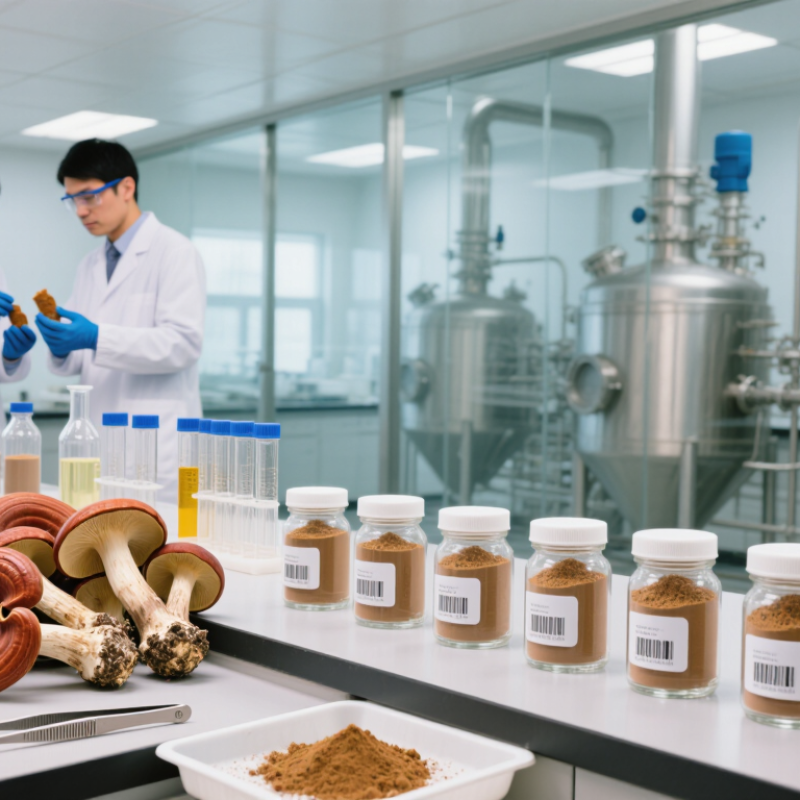
Reishi mushroom extract comes from Ganoderma lucidum, a woody mushroom used in East Asian traditional medicine. Manufacturers usually extract its polysaccharides and triterpenes with hot water, alcohol, or both. These compounds may influence immune signaling and oxidative stress, but the extract is not a proven treatment for disease.
Commercial interest is expanding. Grand View Research valued the global medicinal mushroom market at about USD 25.4 billion in 2022, with continued growth expected through 2030. Mordor Intelligence also reports strong demand for functional mushroom ingredients in foods, drinks, and supplements. Estimates differ because companies define “medicinal mushroom” differently. That matters.
People commonly use reishi extract for general wellness, sleep support, and immune health. Human evidence remains uneven. Some small clinical studies suggest possible benefits, yet larger, well-controlled trials are still limited. Consumers should examine the extract ratio, beta-glucan content, triterpene testing, and contaminant screening. A glossy powder is not enough.
Reliable suppliers should provide batch-specific certificates of analysis. Testing should cover heavy metals, microbes, pesticides, and identity. Experience shows that fruiting-body and mycelium products can differ substantially in composition. I would not treat one as automatically superior. More transparent labeling would help buyers make better decisions. Reishi can be useful, but claims often run ahead of evidence.

When comparing China’s top 10 reishi mushroom extract suppliers, do not rely on rankings alone.
A dependable supplier should identify the mushroom species, cultivation method, and extraction ratio. Ask whether the material is fruiting body, mycelium, or a mixed source. These details affect quality and labeling accuracy.
Request a recent certificate of analysis for every production batch.
It should show beta-glucan levels, moisture, microbial results, heavy metals, pesticides, and solvent residues. “Polysaccharides” can sound impressive, but the testing method matters. I have seen specifications use broad terms that hide important differences. That deserves careful questioning. Check whether the laboratory is independent and whether its report matches the lot number.
Supplier experience becomes clearer through samples and factory communication.
Visit the facility when possible, or request a live video inspection of storage, extraction, drying, and packing areas. Look for traceable raw-material records and documented quality procedures. Certifications can help, but verify their scope and validity. A polished certificate is not proof of consistent production. Discuss lead times, minimum order quantities, packaging protection, and response procedures for failed testing. Ask for three batches, not one. Results may vary more than expected. A capable supplier explains those variations instead of promising perfect numbers. Ensure all claims, ingredients, and documents fit the destination market’s food and supplement requirements.
China’s top 10 reishi mushroom extract suppliers should be judged by evidence, not polished websites. Reliable suppliers usually provide species details, cultivation records, extraction methods, and batch-specific test reports. Look for measured triterpenes and polysaccharides, not vague “high potency” claims. A professional supplier should explain whether the extract comes from fruiting bodies, mycelium, or both. These materials can differ greatly in composition. Ask about solvent use, drying temperature, microbial testing, heavy metals, and pesticide screening. A clear answer matters.
Tips: Request a recent certificate of analysis. Check the batch number. Compare results from independent laboratories when possible. Do not rely on one impressive sample.
In practical sourcing, the strongest suppliers often support stable specifications, traceable raw materials, and consistent packaging. They should answer technical questions without pressure. Factory audits can reveal simple details, such as clean extraction areas, labeled storage drums, and controlled moisture levels. However, supplier rankings are never permanent. Capacity, quality systems, and documentation may change. I would also question unusually low prices. They may reflect efficiency, but they can also signal weaker testing or inconsistent raw materials. A careful buyer should test a pilot order before approving larger volumes. That step feels slow, yet it can prevent expensive surprises.
When comparing China’s top reishi mushroom extract suppliers, quality evidence matters more than attractive catalog images. Ask for the exact species, cultivation method, and material used. Fruiting body and mycelium can produce different profiles. The supplier should report beta-glucans and triterpenes separately, not combine vague “active compounds.” A recent certificate of analysis should match the shipment’s batch number. It should include testing for heavy metals, pesticides, microorganisms, and residual solvents. Third-party laboratory results provide stronger evidence than internal claims.
Look for traceable production records, controlled extraction temperatures, and documented storage conditions. Certifications such as GMP, HACCP, or ISO systems can support reliability, but certificates alone prove little. Check their scope, validity, and issuing organization. Experienced buyers should also request stability data, packaging details, and allergen information. I would inspect a small sample before placing a large order. Even careful teams sometimes overlook moisture changes during transport.
Tips: Compare three recent batch reports, not one old document. Confirm the botanical name and extraction ratio. Request photos of labels, seals, and warehouse conditions. Ask whether testing covers the finished powder, rather than only the raw mushroom. Keep written records of every specification. A polished document can still hide weak controls. Supplier transparency, consistent results, and sensible communication reveal more than a low price.
Choosing among China’s top 10 reishi mushroom extract suppliers requires more than comparing prices. A polished website proves little. Request a recent certificate of analysis for each batch, not a generic document. Check beta-glucan levels, moisture, microbial results, heavy metals, and pesticide testing. The extraction ratio also matters. A higher ratio does not automatically mean better quality.
Ask how the mushrooms are cultivated and identified. The supplier should provide the scientific species name, growing method, harvest records, and processing location. Clear traceability is essential. A reliable factory can explain how raw materials move from cultivation to sealed packaging. Inspect production certificates and quality systems. If possible, arrange a live video audit or an independent factory inspection. Small details matter, such as clean surfaces, labeled storage areas, and controlled humidity.
Request samples from different batches. Compare color, aroma, solubility, and laboratory results. Do not judge quality by appearance alone. Some suppliers answer quickly but avoid technical questions. That is a warning sign. Others provide impressive reports with unclear testing dates. Review them carefully. I would also confirm minimum order quantities, lead times, packaging options, and export documents before signing. One limitation remains: laboratory results can vary between batches, even with careful control. Build a written specification, approve a reference sample, and keep testing after shipment. Price should support your quality requirements, not replace them.
| No. | Anonymous Supplier Profile | Typical Production Focus | Common Reishi Material | Extract Format | Typical Specification Range | Extraction Approach | Quality Documents to Request | Typical MOQ | Indicative Lead Time | Best Fit |
|---|---|---|---|---|---|---|---|---|---|---|
| 1 | Profile A Premium | Standardized nutraceutical ingredient manufacturing | Fruit body of cultivated Ganoderma lucidum | Water-extract powder | Polysaccharides commonly specified at 30%–50%; exact assay method must be confirmed | Hot-water extraction, filtration, concentration and spray drying | COA, specification sheet, allergen statement, heavy-metal report, pesticide report, microbiological test | 25–100 kg | 20–35 days after artwork and order confirmation | Capsules, tablets and powdered dietary supplements |
| 2 | Profile B Dual Extract | Dual-extract ingredients for functional-food applications | Fruit body and mycelium blends | Water-and-ethanol dual extract | Polysaccharides and triterpenes reported separately; percentages vary by raw material and method | Water extraction combined with food-grade ethanol extraction | COA, solvent-residue test, triterpene method, stability data, batch traceability records | 50–200 kg | 25–40 days | Products requiring a broader marker profile |
| 3 | Profile C Organic-Oriented | Organic and clean-label botanical ingredient supply | Certified-organic cultivated fruit body, where available | Organic-compatible hot-water extract | Polysaccharide content usually declared; organic status depends on the specific farm and certificate scope | Water extraction with controlled drying conditions | Valid organic certificate, transaction certificate where applicable, COA, pesticide screen and origin records | 25–100 kg | 30–45 days | Organic supplements and clean-label products |
| 4 | Profile D High Volume | Large-volume commodity extract production | Cultivated fruit body or mixed cultivated biomass | Standardized water extract powder | Often offered in 10:1 to 20:1 declared extract ratios; ratios are not equivalent to active-content assays | Industrial hot-water extraction and spray drying | COA, manufacturing-flow chart, batch records, microbiology, heavy metals and residual-solvent results | 100–500 kg | 15–30 days for regular specifications | High-volume beverage, food and supplement production |
| 5 | Profile E Custom Formulation | Private-label and customized ingredient development | Fruit body, mycelium or blended raw material | Powder, granule or instant beverage-grade extract | Custom target for solubility, color, taste, polysaccharides or triterpenes | Process adjusted for solubility, sensory profile and intended dosage form | Product-development sample, pilot-batch COA, stability protocol, packaging specification and technical data sheet | 50–300 kg | 35–60 days for customized products | Functional beverages and differentiated formulations |
| 6 | Profile F Export Ready | Export-oriented manufacturing with structured documentation | Traceable cultivated fruit body | Water extract or dual extract | Lot-specific assay results preferred over generic catalogue specifications | Validated extraction, controlled concentration and sealed packaging | COA, commercial invoice, packing list, certificate of origin, SDS, health certificate where required and test reports | 25–100 kg | 25–45 days plus international transit | Importers needing consistent export paperwork |
| 7 | Profile G Research Support | Small-batch R&D and sample production | Single-origin fruit body or controlled experimental batches | Fine powder or concentrated laboratory sample | Small batches may be supplied with method-specific polysaccharide or triterpene results | Laboratory or pilot-scale extraction | Sample COA, analytical method, raw-material identification, batch number and storage conditions | 1–25 kg | 10–25 days | Product development, testing and sensory trials |
| 8 | Profile H Traceability Focus | Farm-to-extract traceability and raw-material control | Documented cultivated fruit body | Single-ingredient water extract | Consistent marker specification supported by raw-material and process records | Controlled cultivation followed by water extraction and low-moisture drying | Farm records, cultivation substrate information, batch traceability, COA, contaminant testing and recall procedure | 25–150 kg | 25–40 days | Brands prioritizing origin transparency and repeatability |
| 9 | Profile I Cost Sensitive | Competitive standard extracts for price-sensitive projects | Cultivated fruit body or approved biomass blend | Basic water-extract powder | Commonly sold by extract ratio or minimum polysaccharide level; analytical verification is essential | Conventional water extraction and spray drying | Current COA, microbiological test, heavy-metal test, pesticide screen and confirmation of production site | 100–500 kg | 15–35 days | Large-volume products where cost is a primary factor |
| 10 | Profile J Specialty Extract | Specialty extracts with application-specific processing | Selected fruit body material with defined maturity and origin | Concentrated extract, granule or water-dispersible powder | Specification may include dispersibility, moisture, particle size, polysaccharides and triterpenes | Concentration and drying process optimized for stability and dispersibility | COA, particle-size report, moisture and water-activity data, stability information and packaging validation | 25–100 kg | 30–50 days | Premium powders, instant drinks and specialized formulations |
We are the most reliable and proficient jute goods manufacturer & supplier that helps businesses or individuals with various exportable agricultural commodities biz and jute goods by shipping them worldwide. Our right-time service ensures that whatever color and size of jute product you need, we can make it happen anytime and anywhere! Let’s keep our earth safer to live in!
Important link
Address
Bangladesh Address:
Fair Plaza (9th Floor), Plot : 3C, Section : 01, Mirpur, Dhaka:1216
UK Office:
242 Manor Road, Droylsden, Manchester, M43 6JD, United Kingdom.
Let's Talk
We are the most reliable and proficient jute goods manufacturer & supplier that helps businesses or individuals with various exportable agricultural commodities biz and jute goods by shipping them worldwide. Our right-time service ensures that whatever color and size of jute product you need, we can make it happen anytime and anywhere! Let’s keep our earth safer to live in!
Bangladesh Address:
Fair Plaza (9th Floor), Plot : 3C, Section : 01, Mirpur, Dhaka:1216
UK Office:
242 Manor Road, Droylsden, Manchester, M43 6JD, United Kingdom.