
• Home
  • About
    • jute Bag

      Eco-Chic and Durable – Perfect for Sustainable Living.

      Cashew Nut Bag

      Sustainable jute bag for lasting cashew nut freshness

      Cocoa Bag

      Eco-friendly jute bag for rich cocoa flavor preservation

      Coffee Bag

      Elegant, durable jute bag to keep coffee beans fresh and eco-friendly

      Hazel Nut Bag

      Eco-conscious jute bag for hazelnut freshness and quality

      Shea Nut Bag

      Durable jute bag for fresh, organic shea nuts

      Tote Bag

      Stylish, eco-friendly jute tote for daily essentials

      Wheat Bag

      Sustainable jute bag for optimal wheat freshness

    • Jute Yarn

      Eco-Chic and Durable – Perfect for Sustainable Living.

      Jute Rope

      Sustainable jute bag for lasting cashew nut freshness

      Jute Fabrics

      Eco-friendly jute bag for rich cocoa flavor preservation

      Hessian cloth

      Sustainable Hessian cloth suppliers

  • Products
  • Export Country
  • Blog

Top Private Label Body Care Manufacturers in China

China has become a significant sourcing destination for brands developing Private Label Body Care products. Its manufacturing network supports lotions, body washes, scrubs, oils, deodorants, and gift-ready collections. Yet factory selection requires more than comparing online catalogs or quoted prices.

This guide examines leading private label body care manufacturers in China through practical sourcing criteria. These include formulation capabilities, ingredient traceability, production experience, packaging options, quality systems, and communication standards. A reliable manufacturer should provide clear product specifications, realistic lead times, sample procedures, and documented quality checks. Certifications may support credibility, but they should be verified directly and matched to the product category. A certificate alone proves little.

Small details often reveal operational discipline. Look for batch records, sealed sample containers, clean filling areas, and consistent label information. Ask how the factory handles stability testing, microbial testing, rejected materials, and production changes. Experienced buyers also review minimum order quantities, tooling costs, artwork approvals, and shipping documentation before signing agreements. These steps reduce surprises.

No supplier is perfect. That matters. A factory may offer excellent formulas but limited packaging choices. Another may provide attractive pricing but respond slowly during revisions. This article therefore avoids simple rankings based on marketing claims. It focuses on evidence, product fit, and long-term reliability. Readers should still conduct independent audits, request current documentation, and test samples before making commercial decisions. Careful evaluation creates stronger partnerships and more dependable body care products.
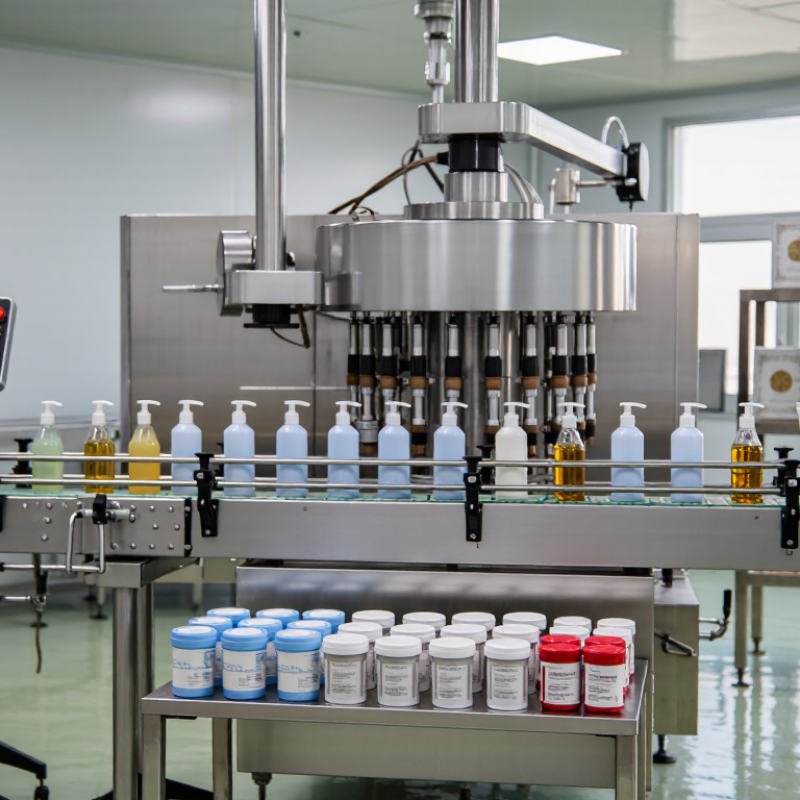
Top Private Label Body Care Manufacturers in China

What Private Label Body Care Manufacturing Means in China

Private label body care manufacturing in China means a business develops products under its own name while a Chinese factory manages production. The buyer may provide a concept, fragrance direction, or target price. The manufacturer can then handle formulation, ingredient sourcing, filling, packaging, and quality documentation. OEM usually follows a fixed formula. ODM offers more development support. The difference matters.

China’s National Bureau of Statistics reported cosmetics retail sales of about RMB 414.2 billion in 2023. This scale supports specialized factories, packaging suppliers, testing laboratories, and flexible production lines. According to Grand View Research, the global personal care market continues to expand, driven by skincare, hygiene, and ingredient-focused products. Chinese manufacturers often respond quickly to these trends, especially for lotion, body wash, scrub, and deodorizing products.

However, private label is not automatically cheaper. A low minimum order can hide higher packaging costs. A beautiful sample may also perform differently during mass production. Reliable sourcing requires batch records, stability testing, microbial checks, and documented quality controls aligned with ISO 22716 principles. Factories should explain lead times clearly and provide traceable samples. Ask difficult questions early. Is the fragrance stable after heat exposure? Does the pump work after repeated use? Some suppliers answer confidently, but evidence remains more valuable than promises. A factory’s manufacturing license, testing process, and communication discipline deserve equal attention.

How to Evaluate Chinese Body Care Manufacturers

China’s private-label body-care sector is attractive, but factory selection needs evidence, not polished samples. McKinsey’s 2023 beauty-market report projected global beauty sales could reach about $580 billion by 2027. China’s National Bureau of Statistics recorded approximately RMB 414.2 billion in cosmetics retail sales in 2023, showing strong demand and serious competition.

Start with legal capacity. Request the manufacturer’s cosmetic production license, ingredient specifications, safety assessment files, and recent inspection records. Confirm whether the facility handles ordinary or special cosmetics under China’s regulatory framework. Ask how product changes, complaint records, and batch recalls are documented. Weak answers matter.

Then inspect the factory, not only the catalog. Look for segregated raw-material storage, calibrated scales, batch coding, water-treatment logs, and controlled filling rooms. Check microbial testing, stability testing, packaging compatibility, and retained samples. ISO 22716 certification is useful, but it does not prove every batch meets your requirements. Verify its scope, issuing body, and audit date.

Use a small pilot order before signing a large contract. Compare viscosity, fragrance, color, pump performance, and fill weight across several batches. Grand View Research continues to identify ingredient safety and product transparency as important personal-care market drivers. Treat marketing claims carefully. “Natural” is not a testing method. A glossy showroom can still hide poor traceability. No audit is perfect, and that should remain part of your decision.

Top Private Label Body Care Manufacturers in China - How to Evaluate Chinese Body Care Manufacturers

Evaluation Dimension Why It Matters Reliable Evidence to Request Practical Benchmark Suggested Weight
Manufacturing Authorization Confirms that the facility is legally permitted to manufacture and package cosmetic products. Valid Chinese cosmetic manufacturing license, business license, and facility address matching the audit location. Documents are current, traceable, and consistent with the products being quoted. 15%
Quality Management System A documented quality system reduces batch variation, contamination risk, and packaging defects. ISO 22716 or equivalent GMP documentation, standard operating procedures, internal audit records, and corrective-action reports. Written procedures cover raw materials, production, cleaning, release, complaints, and recalls. 15%
Product Safety Testing Body care products require evidence that formulas are safe, stable, and suitable for their intended use. Stability reports, microbiological tests, preservative effectiveness testing where applicable, safety assessments, and product specifications. Testing is performed on the final formula and packaging combination, not only on individual ingredients. 15%
Ingredient Traceability Traceable materials help identify the source of defects and support regulatory and customer inquiries. Approved-supplier list, certificates of analysis, lot numbers, incoming inspection records, and batch records. Every raw material and finished batch can be traced through documented lot information. 10%
Formulation and Customization A capable R&D team can adapt texture, fragrance, active ingredients, color, and packaging to the target market. Formula brief, sample-development process, laboratory capabilities, ingredient restrictions, and ownership terms for custom formulas. The manufacturer provides controlled sample revisions and clearly documents formula changes. 10%
Minimum Order Quantity MOQ affects inventory exposure, launch cost, cash flow, and the feasibility of testing a new product. Separate MOQ details for formula, filling, container, label, printed carton, and fragrance or color customization. All MOQ conditions are stated in writing and distinguish stock packaging from fully customized packaging. 8%
Production Capacity and Lead Time Capacity planning helps prevent delays during product launches and seasonal demand increases. Production-line details, normal lead time, peak-season schedule, capacity reservation policy, and on-time delivery records. Lead times are quoted separately for sampling, bulk production, packaging procurement, and export preparation. 8%
Packaging Compatibility Incompatible packaging can cause leakage, discoloration, pump failure, or reduced product shelf life. Packaging specifications, compatibility testing, leak testing, drop testing, closure checks, and artwork approval procedure. The filled product is tested in the final container under storage and transport conditions. 7%
Regulatory and Export Support Different destinations impose different requirements for ingredients, labels, claims, notifications, and product files. Ingredient list in INCI format, safety documents, certificates, export records, labeling review, and destination-market support scope. The buyer remains able to verify regulatory responsibility, required documents, and claim substantiation before production. 7%
Quality Control and Batch Release Defined release controls help ensure that only conforming products are shipped. Finished-product specifications, inspection plans, retain-sample policy, batch release records, and nonconformance procedures. Each batch is checked against documented physical, chemical, microbiological, packaging, and labeling requirements as applicable. 5%
Total Suggested Evaluation Weight 100%
Recommended evaluation method: Score each dimension from 1 to 5, multiply the score by the suggested weight, and verify all critical documents through samples, audits, and written records before signing a manufacturing agreement.

Key Products and Formulation Services Available

Top Private Label Body Care Manufacturers in China

China’s private label body care sector now supports lotions, body washes, scrubs, oils, deodorants, and hand creams. China’s National Bureau of Statistics reported approximately RMB 414.2 billion in cosmetics retail sales in 2023. This demand encourages manufacturers to offer faster, more flexible development services.

Reliable factories usually provide OEM and ODM formulation support. Their teams can adjust viscosity, fragrance strength, absorption speed, foam, and after-feel. They may also develop sulfate-free cleansers, plant-oil body creams, exfoliating gels, and sensitive-skin formulas. According to Grand View Research, the global skincare market reached about USD 155.7 billion in 2022. The report also forecasts continued growth through 2030. Body care buyers should therefore request formulas with clear performance evidence, not attractive ingredient lists alone.

Useful services include laboratory sampling, stability testing, preservative challenge testing, packaging compatibility checks, and pilot production. Manufacturers following ISO 22716 practices can offer stronger production controls and batch traceability. However, certification does not guarantee a perfect formula. That assumption needs testing. A fragrance may perform well in a sample but change after months inside a plastic bottle. A thick cream may feel luxurious yet fail in hot, humid shipping conditions. Experienced sourcing teams should review test records, raw-material specifications, safety assessments, and claim support before approving bulk production. Small pilot batches remain valuable, even when timelines feel inconvenient.

Production Standards, Certifications, and Quality Control

Top Private Label Body Care Manufacturers in China

Reliable body care production starts with documented standards, not attractive samples. A capable manufacturer should operate under cosmetic GMP principles and maintain clear batch records. ISO 22716 is especially relevant for hygiene, production, storage, and personnel controls. ISO 9001 can support broader quality management, but it does not replace cosmetic GMP.

Ask for current certificates and verify their scope, issuing body, and expiry dates. Request raw material specifications, supplier approval records, and certificates of analysis for each batch. Finished products should receive microbial, stability, compatibility, and appearance testing. Packaging also needs inspection. A leaking pump can ruin an otherwise acceptable formula.

Quality control must continue after approval. Inspectors should check filling weight, label accuracy, lot coding, and carton condition during production. Samples should remain in controlled storage for future comparison. Testing for heavy metals or other contaminants may be necessary, depending on the formula and destination market. Regulatory files should support ingredient names, safety information, and product claims.

Paperwork alone is not proof. A factory may present polished documents yet show weak floor discipline. During an audit, examine handwashing areas, quarantine zones, cleaning logs, and temperature records. Ask how rejected materials are isolated. Ask who releases the batch. Some suppliers may answer vaguely, which is a warning. Even a strong system can have gaps, so independent pre-shipment inspection remains valuable. Mistakes happen; undocumented mistakes are harder to trust.

Sourcing, Packaging, and Partnership Considerations

Top Private Label Body Care Manufacturers in China

Sourcing a private label body care manufacturer in China requires more than comparing unit prices. Request facility photos, production licenses, quality certificates, and recent batch records. A reliable supplier should explain its testing process clearly. Ask how it checks viscosity, fragrance stability, microbial limits, and container compatibility. Small pilot orders reveal more than polished sales presentations. They expose filling errors, delayed replies, and unclear documentation.

Packaging decisions affect both cost and product performance. Confirm whether bottles, pumps, tubes, and cartons come from approved suppliers. Test each component with the formula under heat and cold conditions. A pump may look premium but dispense unevenly after several weeks. Request color samples under different lighting. Printed shades can change between digital proofs and mass production. This is where many plans become expensive.

Partnership quality depends on communication. Set written specifications for ingredients, artwork, tolerances, inspections, and shipment timing. Clarify who owns formulas, molds, test reports, and packaging artwork. Use independent inspections when order value justifies the cost. Keep safety files and market-specific compliance documents organized. No supplier is perfect. Even experienced buyers sometimes overlook carton strength or translation errors. Regular video audits and recorded corrective actions create useful accountability. A manufacturer that admits a production problem is often safer than one promising flawless results.

Shopping Basket