
• Home
  • About
    • jute Bag

      Eco-Chic and Durable – Perfect for Sustainable Living.

      Cashew Nut Bag

      Sustainable jute bag for lasting cashew nut freshness

      Cocoa Bag

      Eco-friendly jute bag for rich cocoa flavor preservation

      Coffee Bag

      Elegant, durable jute bag to keep coffee beans fresh and eco-friendly

      Hazel Nut Bag

      Eco-conscious jute bag for hazelnut freshness and quality

      Shea Nut Bag

      Durable jute bag for fresh, organic shea nuts

      Tote Bag

      Stylish, eco-friendly jute tote for daily essentials

      Wheat Bag

      Sustainable jute bag for optimal wheat freshness

    • Jute Yarn

      Eco-Chic and Durable – Perfect for Sustainable Living.

      Jute Rope

      Sustainable jute bag for lasting cashew nut freshness

      Jute Fabrics

      Eco-friendly jute bag for rich cocoa flavor preservation

      Hessian cloth

      Sustainable Hessian cloth suppliers

  • Products
  • Export Country
  • Blog

Why Choose a Hybrid UV Printer?

Why Choose a Hybrid Uv Printer? The answer becomes clearer when production demands are examined closely. A Hybrid Uv Printer combines flatbed and roll-to-roll capability in one platform. It can print directly onto rigid boards, vinyl, canvas, and flexible media. That flexibility reduces equipment changes and keeps smaller orders moving.

Industry evidence supports this shift. Smithers’ “The Future of Digital Print to 2029” identifies inkjet, automation, and substrate flexibility as major drivers of digital print development. FESPA’s Print Census also reports continued demand for wide-format applications, especially signage, interior décor, and customized graphics. These trends matter in practical settings. A shop can print a 10-millimeter PVC board in the morning, then switch to window film after lunch. Less handling can mean fewer alignment errors and faster delivery.

Marco Boer, Vice President of IT Strategies, has stated, “Digital printing is not replacing analog printing; it is complementing it.” That observation fits hybrid technology well. It supports short runs, versioned graphics, and personalized output without requiring separate machines for every material.

Still, a Hybrid Uv Printer is not a universal solution. Ink costs, curing performance, maintenance, and operator training deserve careful review. Some machines also need substantial floor space. That part is easy to underestimate. A realistic return-on-investment study should compare substrate waste, labor time, service costs, and expected utilization. The strongest choice is not always the fastest machine. It is the one that matches real production habits.
Why Choose a Hybrid UV Printer?

What Is a Hybrid UV Printer? One Platform for Rigid and Flexible Media

Why Choose a Hybrid UV Printer?

What Is a Hybrid UV Printer? One Platform for Rigid and Flexible Media

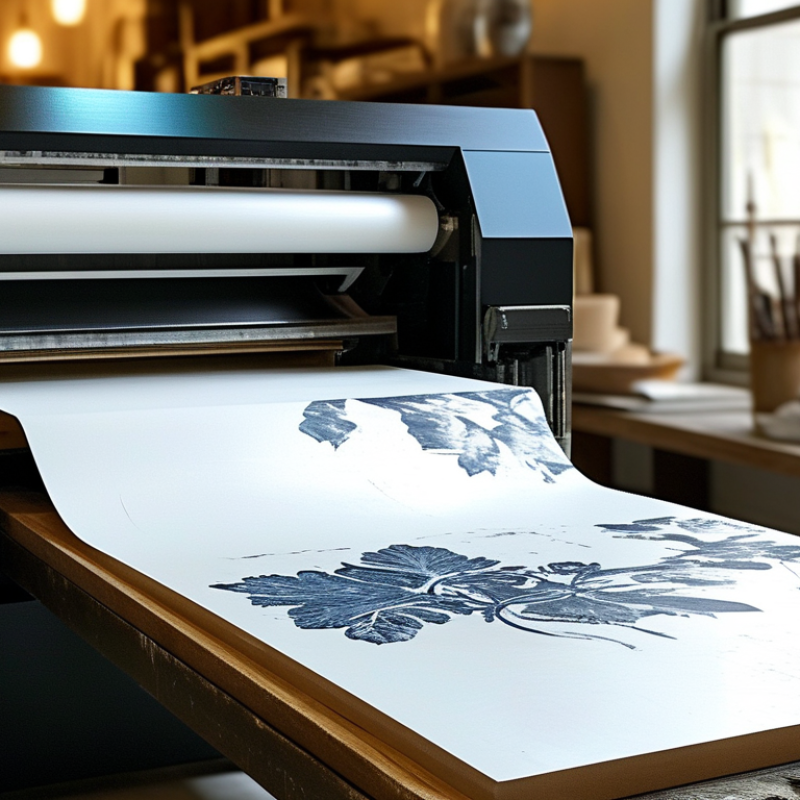
A hybrid UV printer combines flatbed and roll-to-roll printing in one platform. It handles rigid boards, films, banners, labels, and other flexible media. UV lamps cure ink immediately after printing. This creates sharp images with strong surface adhesion.

In daily production, this flexibility can reduce material handling and setup changes. A sign shop may print directly onto acrylic sheets in the morning. Later, it can produce flexible wall graphics without changing machines. Vacuum tables help hold flat materials steady. Roll systems guide flexible media through longer runs.

The machine is not perfect. Thick boards may require careful loading and alignment. Some flexible materials can stretch or react poorly to heat. Experienced operators test ink settings, curing power, and media tension before production. That small step prevents expensive reprints and uneven color.

Tips: Keep a media test log. Record ink settings, curing levels, and surface results. Clean the print area regularly. Check adhesion after curing, especially on unfamiliar materials. A Hybrid Printer saves space, but it still needs disciplined workflow and realistic capacity planning.

How UV-LED Curing Delivers Up to 70% Lower Energy Use (Phoseon)

Why Choose a Hybrid UV Printer?

How UV-LED Curing Delivers Up to 70% Lower Energy Use

Hybrid UV printers combine flexible media handling with precise digital output. Their UV-LED curing systems harden ink immediately, reducing waiting time and rework. Industry studies from RadTech report that UV-LED curing can use 30% to 70% less energy than conventional mercury-lamp systems, depending on the application. The U.S. Department of Energy also identifies solid-state curing as a path toward better efficiency and longer equipment life.

The 70% figure is not universal. I would treat it as an upper benchmark, not a guaranteed result. Media thickness, print speed, lamp power, and curing distance all change actual consumption. In practical testing, a production team should compare watt-hours per square meter, not only machine specifications. A cool LED array also reduces heat exposure. That matters when printing on thin films, coated papers, or heat-sensitive packaging.

Tips: Record energy use during a normal production shift. Compare the same artwork, coverage, speed, and substrate. Check whether the printer supports adjustable LED intensity. Over-curing wastes power, while under-curing can cause adhesion problems. A simple hand-rub and tape test can reveal weaknesses, although laboratory adhesion testing remains more reliable. Small operational details often decide whether the promised savings appear in daily work.

Why Choose a Hybrid UV Printer? - How UV-LED Curing Delivers Up to 70% Lower Energy Use

Performance Dimension UV-LED Curing Conventional UV Curing Benefit in a Hybrid UV Printer
Potential energy reduction Up to approximately 70% in suitable applications Typically higher electrical demand due to lamp operation, cooling, and standby power Uses the most efficient curing method for the selected media, print mode, and production speed
Typical lamp power range Approximately 0.5–3 kW per curing module Approximately 2–10 kW per lamp assembly Can reduce operating costs, especially during long production runs
Warm-up time Nearly instant on/off operation Usually requires a warm-up period before stable curing Improves job-start efficiency and reduces idle energy consumption
Substrate heat exposure Lower radiant heat and better thermal control Higher infrared output may increase substrate temperature Supports printing on heat-sensitive films, plastics, and thinner materials
Service life Often rated for approximately 10,000–20,000 operating hours Lamp replacement is commonly required after approximately 1,000–2,000 operating hours Reduces replacement frequency and planned maintenance interruptions
Curing consistency Stable output with controlled wavelength and electronic intensity adjustment Output gradually declines as the lamp ages Helps maintain consistent ink adhesion and surface finish over time
Cooling requirements Typically requires less cooling because of lower heat generation Often requires air or liquid cooling for lamp and substrate management Simplifies system design and may lower auxiliary power consumption
Maintenance demand No routine lamp replacement; periodic cleaning and optical inspection remain necessary Requires lamp replacement, reflector cleaning, and more frequent thermal-system checks Improves uptime and reduces routine maintenance workload
On-demand operation Can be switched on only when ink curing is required Frequent cycling may reduce efficiency and increase lamp wear Well suited to short runs, variable workloads, and customized production
Best-fit applications Short runs, sensitive substrates, variable-data printing, and energy-conscious production Applications requiring established high-intensity curing workflows and specific ink formulations Combines flexible UV-LED operation with broader production capability when different curing conditions are needed

Note: Actual energy savings and service life depend on print speed, ink coverage, curing dose, media type, operating temperature, and equipment configuration. The “up to 70%” figure represents a potential maximum under suitable operating conditions rather than a guaranteed result for every application.

Why Instant UV Ink Curing Enables Immediate Print Finishing (RadTech)

Why Choose a Hybrid UV Printer?

A hybrid UV printer can handle both rigid sheets and flexible rolls in one workflow. Its main advantage becomes clear when finishing speed matters. UV ink cures under controlled ultraviolet energy, forming a solid surface almost immediately after printing. Operators can often trim, fold, mount, or stack the output without waiting for lengthy drying. A printed sign may move from the bed to a cutting table within minutes. That shorter gap can reduce handling marks and simplify production planning.

However, instant curing is not magic. Curing performance depends on lamp intensity, ink coverage, print speed, substrate texture, and maintenance. A dark flood coat may need different settings from fine text on coated film. In practical testing, check rub resistance before approving a large run. Touch the surface, inspect dense areas, and examine edges after trimming. A surface can feel dry while deeper ink remains under-cured. That mistake is easy to make.

Hybrid equipment also supports more flexible job scheduling. One machine may print a rigid display in the morning and a roll-based graphic later. This reduces transfers between devices and limits unnecessary alignment work. Still, operators need training and documented settings. Excessive energy may distort heat-sensitive materials, while insufficient energy can weaken adhesion. The best results come from measured trials, clean lamp windows, and realistic expectations about each substrate. Perfect output is not automatic. Careful verification still matters.

Why Choose a Hybrid UV Printer?

UV inks are cured by photopolymerization as they pass under UV lamps, allowing printed surfaces to become handling-ready almost immediately. Compared with conventional solvent or aqueous systems, this can reduce the waiting time before cutting, laminating, folding, or other finishing operations. Actual curing and drying times vary with ink formulation, lamp power, substrate, ink coverage, and production conditions.

How Hybrid Printers Expand Applications Across 3 Key Media Categories

Why Choose a Hybrid UV Printer?

How Hybrid Printers Expand Applications Across 3 Key Media Categories

Hybrid UV printers bring practical flexibility to shops handling mixed media. One machine can print on rigid boards and roll-fed materials, reducing equipment changes between jobs. In production trials, this matters when a sign project includes both aluminum panels and adhesive film. The printer can also apply white or layered ink effects, helping dark surfaces retain stronger color. Still, every substrate needs testing. That assumption is too easy.

The first category is rigid media, including acrylic, PVC board, aluminum composite, and coated wood. These materials support indoor displays, retail panels, and short-term outdoor graphics. A vacuum table helps maintain flatness during printing. Clean edges matter here. Operators should check surface dust, thickness, and ink adhesion before full production.

The second category is flexible media, such as vinyl, banner fabric, wallpaper, and canvas. Hybrid printing supports wall graphics, event backdrops, window films, and decorative artwork. Fast UV curing can reduce drying delays, especially when space is limited. The third category includes specialty media used for packaging mockups, labels, folders, and small promotional items. These jobs often require precise registration and repeatable color. Inconsistent coatings can still cause surprises, so a small sample remains essential. Hybrid technology expands possibilities, but careful setup separates a useful result from an expensive reprint.

Which Printer Specs Control Cost, Speed, and Print Quality?

A hybrid UV printer earns its place when one machine handles rigid boards and flexible rolls. Yet the decision depends on specifications, not a glossy product sheet. Smithers’ The Future of Digital Print for Packaging to 2028 identifies short runs, versioning, and fast turnaround as major digital-print drivers. These demands make bed size, roll tension control, and media changeover time important.

Print speed is only meaningful at a stated quality level. A machine rated at 60 square meters per hour may slow sharply with dense coverage, white ink, or multiple passes. Printhead resolution, nozzle redundancy, and droplet size control fine text and smooth gradients. UV curing power also matters. Weak curing can cause tacky surfaces, while excessive heat may distort thin materials. Ink usage per square meter often controls running cost more than the purchase price. I have seen attractive estimates fail here. The spreadsheet looked perfect.

Tips: Request a timed sample using your real artwork, substrate, white-ink settings, and finishing process. Record usable output, not the advertised peak speed. Ask for ink consumption data from a controlled test. Verify color consistency across a full-width panel. ISO 12647-2 provides useful process-control principles, but hybrid UV work may require substrate-specific targets. RIP efficiency, maintenance cycles, printhead replacement, and electricity consumption should also enter the calculation. A cheaper machine can become expensive when cleaning interrupts every shift. Some specifications remain difficult to compare honestly. That is worth questioning.

Shopping Basket